Travel Essay : TRE 2025 with Matt Bourland
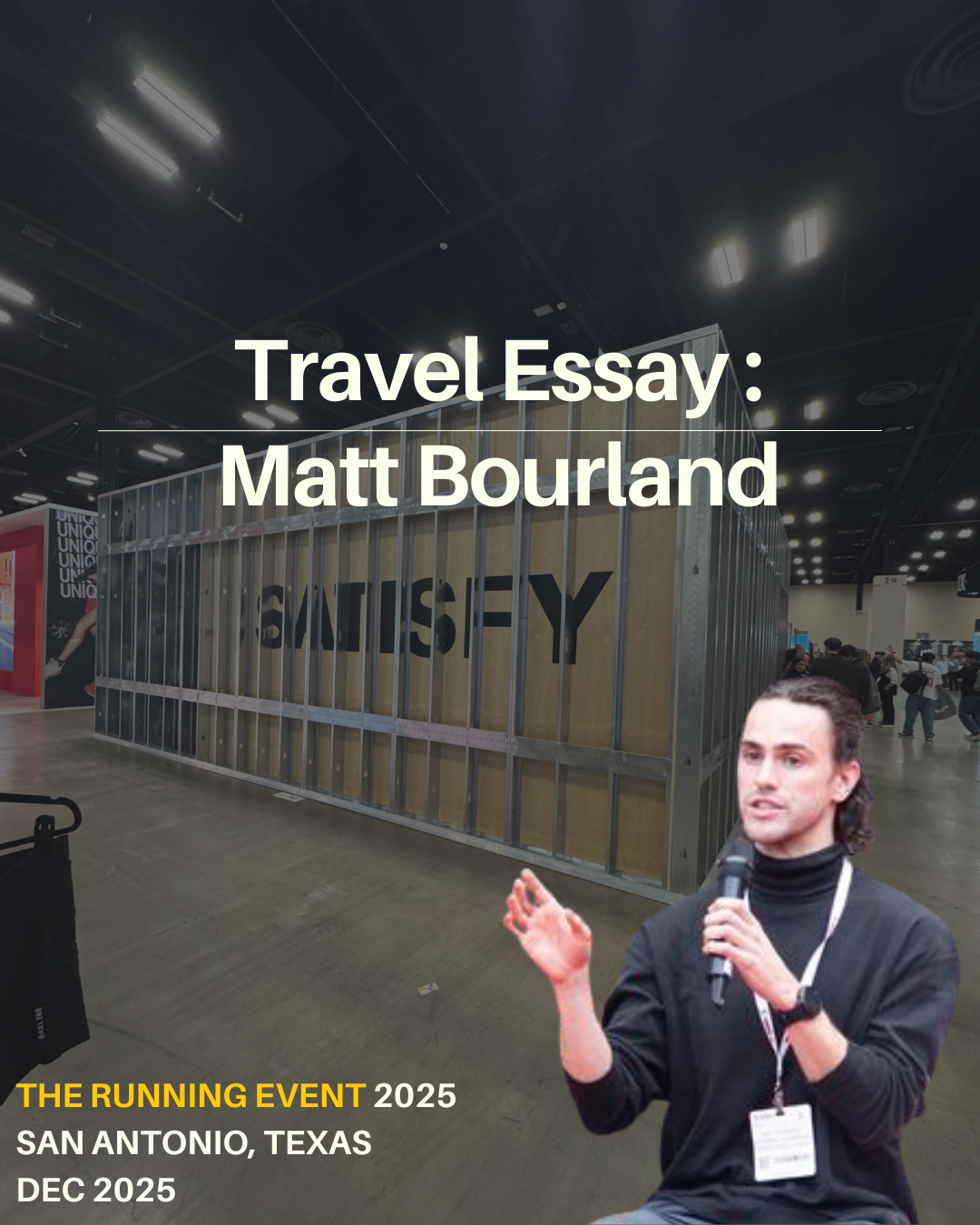
An Inside Out Perspective on The Running Event 2025
By Matt Bourland
All the big brands displaying their wares, half of my YouTube feed in the same zip code, and boys in mesh hats… who wouldn’t want to wander the Henry B. Gonzalez Convention Center for the 2025 TRE in San Antonio?
Here’s what stood out walking the floor, a stranger in a strange land…
The Venue
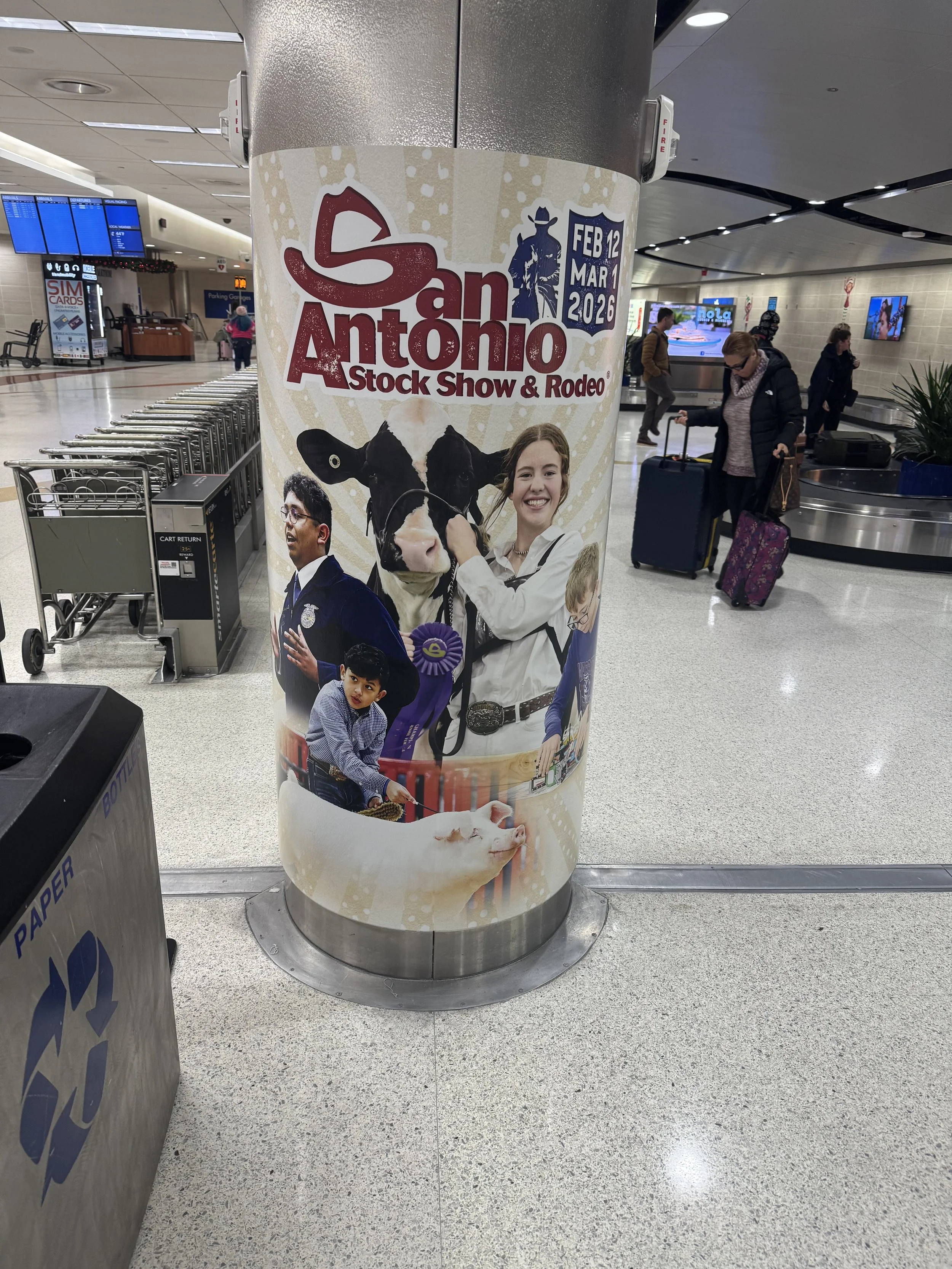
The hall is barren, mostly concrete, with multiple industrial coatings applied to everything. The overhead lights are intense. There is a precise perimeter around the busy field of booths. It costs $20k for a brand just to be here.
Henry Barbosa González was an American Democratic politician from Texas serving from 1961 to 1999. I don’t know what his beliefs or voting record were, but the convention center for TRE is named after him.
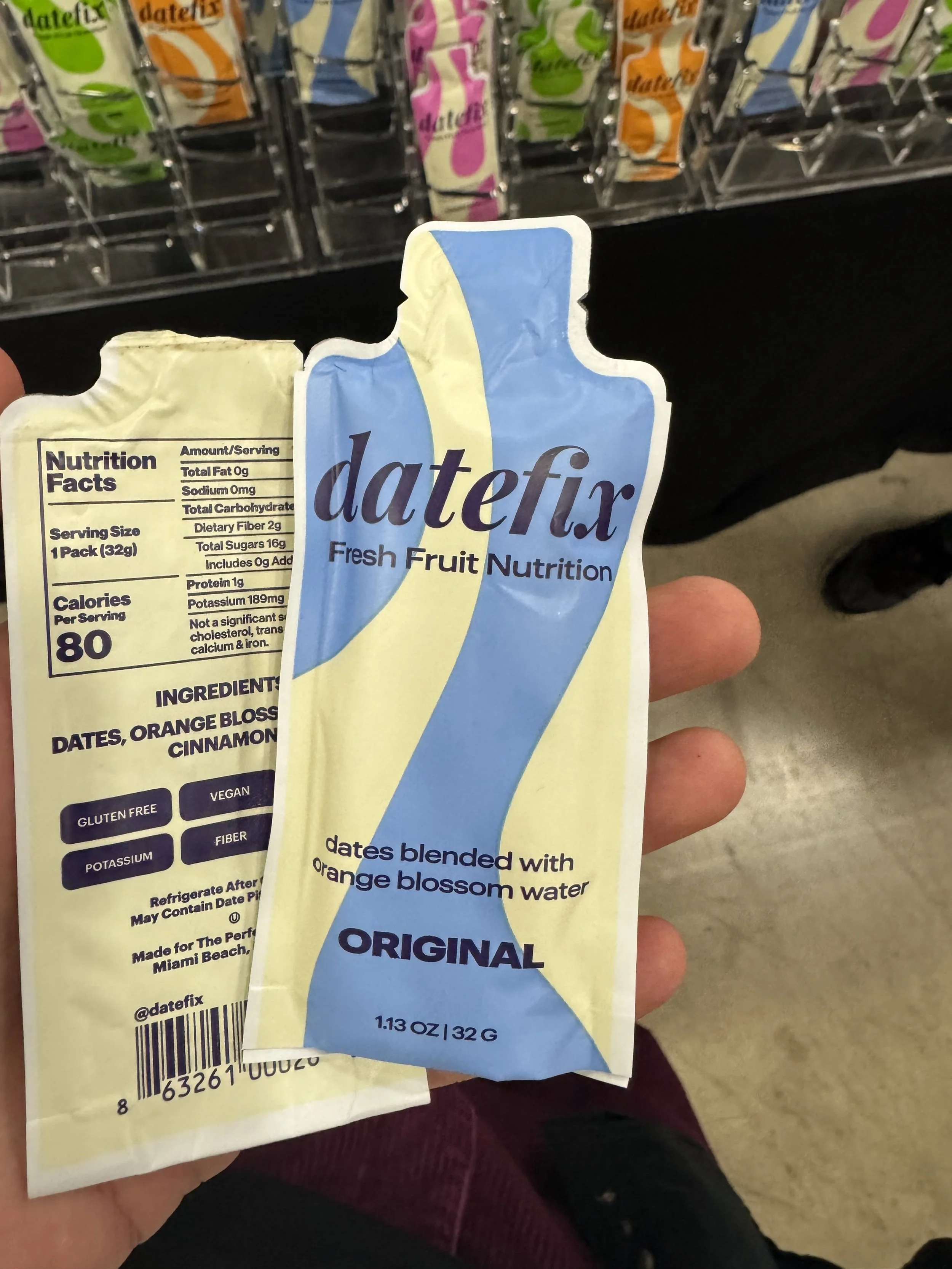
The convention center is in a food desert. The nearest grocery store is about a mile away. The best thing I ate was a medjool date blended into a paste and entrapped into a single-serve run gel container.
Pruzan: Women-Led Performance Apparel
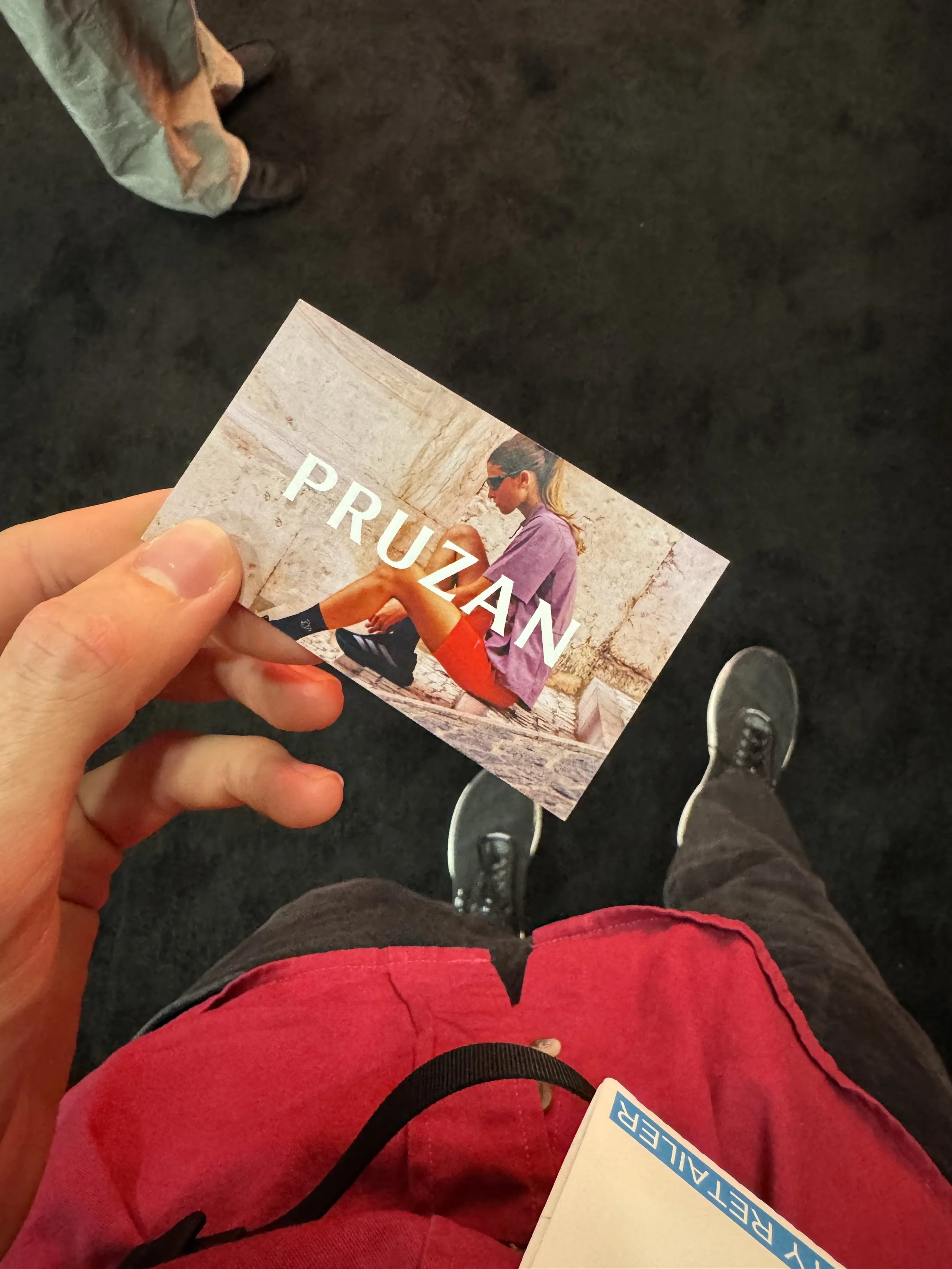
Speaker sessions were the most valuable part of TRE for me. The women’s fashion panel was especially good because of the insights from Jesse Hyman, co-founder of Pruzan. There is sincerity and energy to the brand.
A lot of women’s apparel lines at major footwear brands are made by adjusting men’s lines. The heuristic of “shrink it and pink it” is commonly used (lame).
Pruzan is thinking from first principles to design performance gear for women. Their team acknowledged that they have a ways to go to make garments that work for runners of all shapes and sizes, but there are very few woman-led brands in the running space. They were a breath of fresh air on the very masculine show floor. Inclusive, accommodating fashion is desperately needed. I hope Pruzan continue to prioritize this.
While the heritage and meaning of the brand is a little unclear even after visiting the booth, the color choices are unique, the materials feel high-quality (likely to prevent chafing in the wrong places), the waist band on their Curved Marathon Short looks perfect for the feminine form, and they have a statement piece in their Limited Edition Mesh Singlet.
More of this perspective is critical to moving the sport forward and supporting the women who are responsible for the growth in distance running.
I want to understand the ethos of Pruzan more fully, and there’s so much opportunity for storytelling with this brand. I can’t wait to see what they do next. When major footwear brand collaborates with them in 2028, I’ll say I met Jesse years ago and the brand was always cool.
Mount to Coast: The Product Speaks
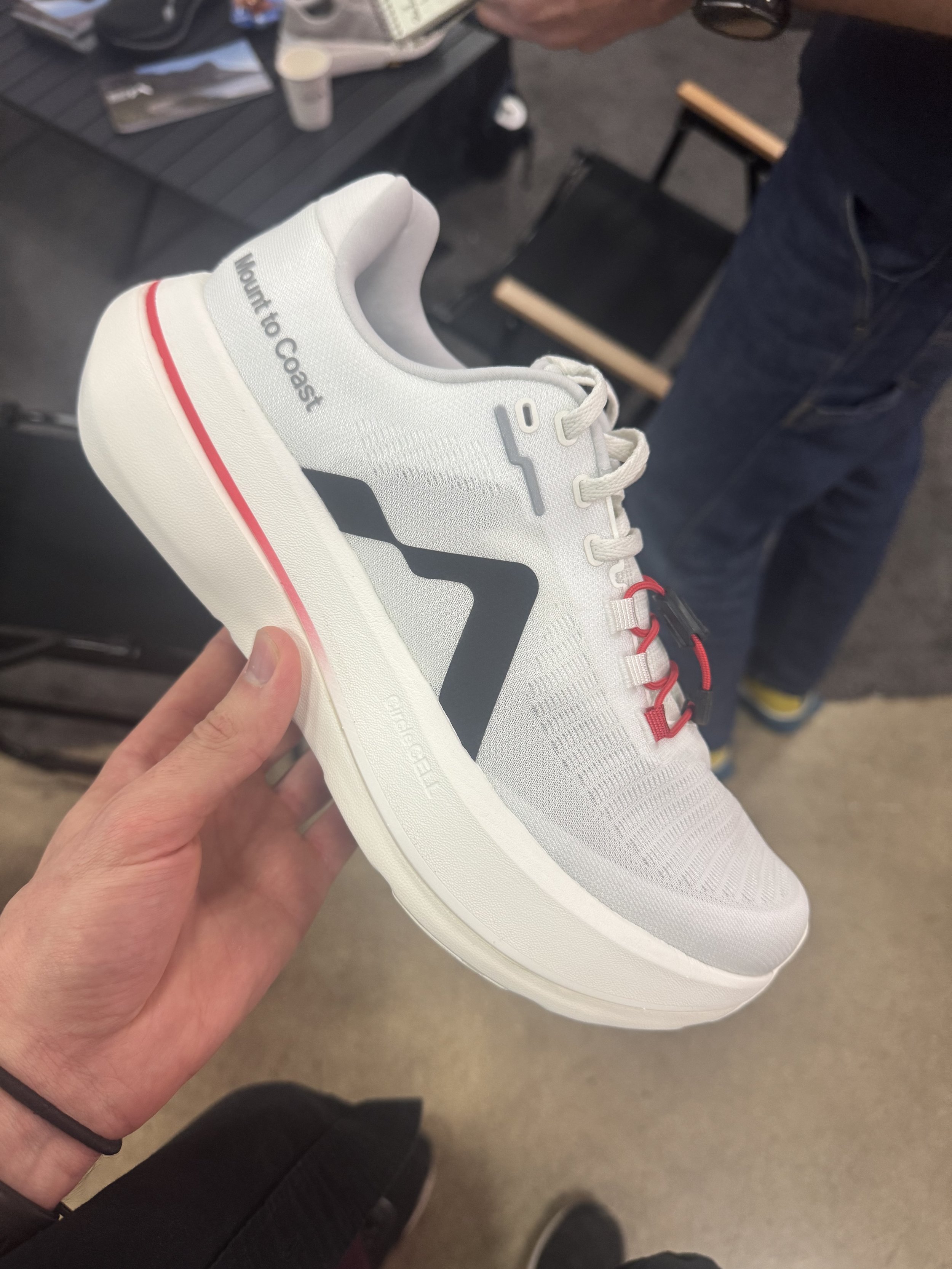
I love when product performance is more important than brand.
Mount to Coast’s mantra, “for athletes who transcend distance,” hits hard and shapes their footwear. They’re growing quickly, and 2026 is a big year for them: a better hard mountain racing shoe, a max-cushion road shoe called the C1, and what I think is the first-ever shoe reviewer + brand collab. Believe in the Run helped design a Mount to Coast H1 with a sock-like collar and a fully taupe upper.
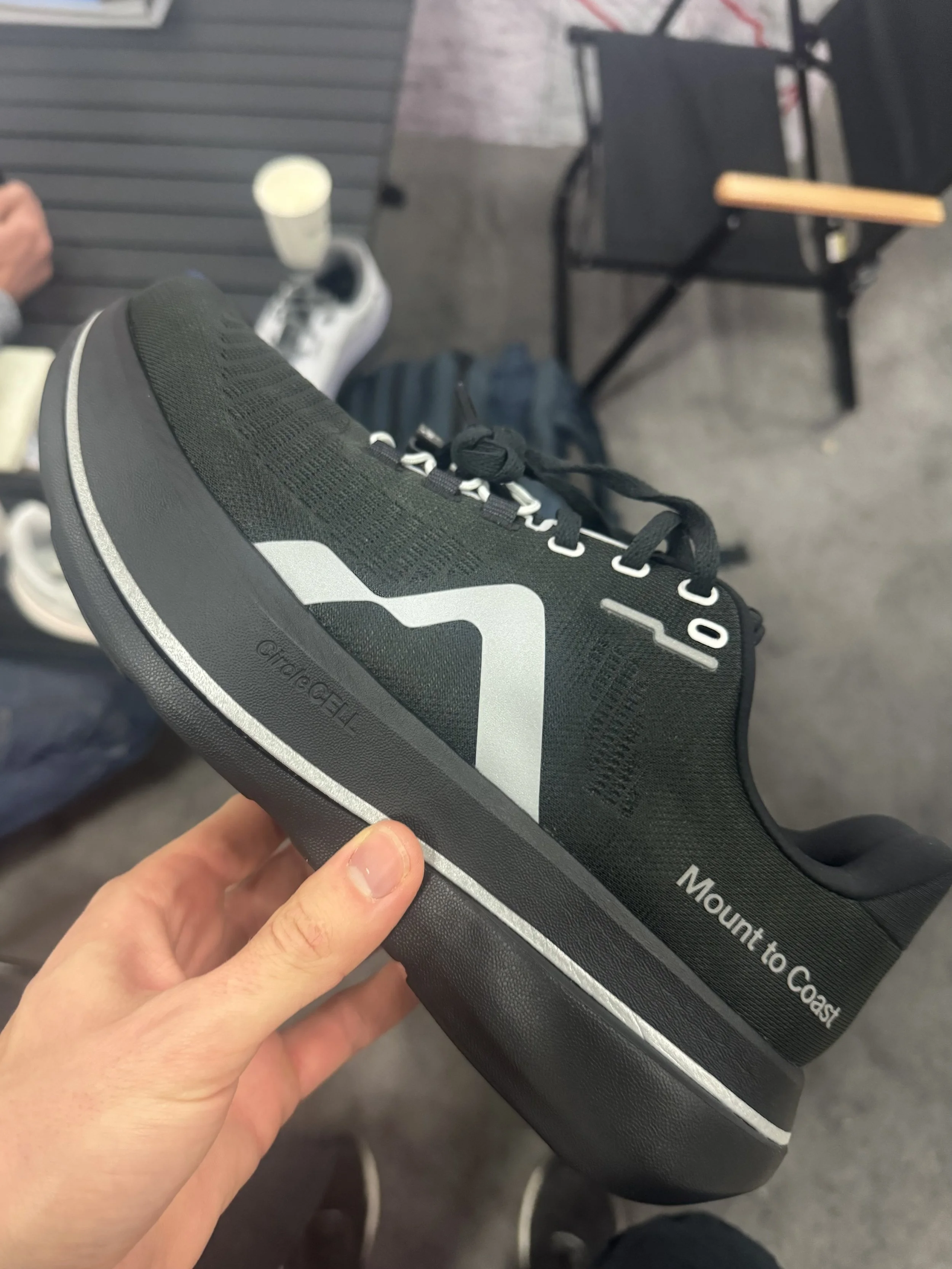
Mount to Coast is based in Hong Kong, but their target market is the U.S. and Western Europe. Some in the run-specialty space made comments to me about this. Frankly, I don’t care. What does New Balance manufacturing in America mean to you when their CEO donated $400,000 to Trump in 2016 and roughly 2 million a year to conservative groups since?
Material innovation happens in Asia. Mount to Coast’s product is sleek and opinionated partially because they share an office park with one of the best midsole manufacturers in the world. Their foams perform like PEBA but last way longer. They are built for ultramarathons and long efforts. They’re minimal, tasteful, functional, and I can’t wait to try a pair myself. I’m going to wait for the C1 in the black colorway—it’s the product I want most from this show.
Balmoral: Canada Chic + Americana Inspo
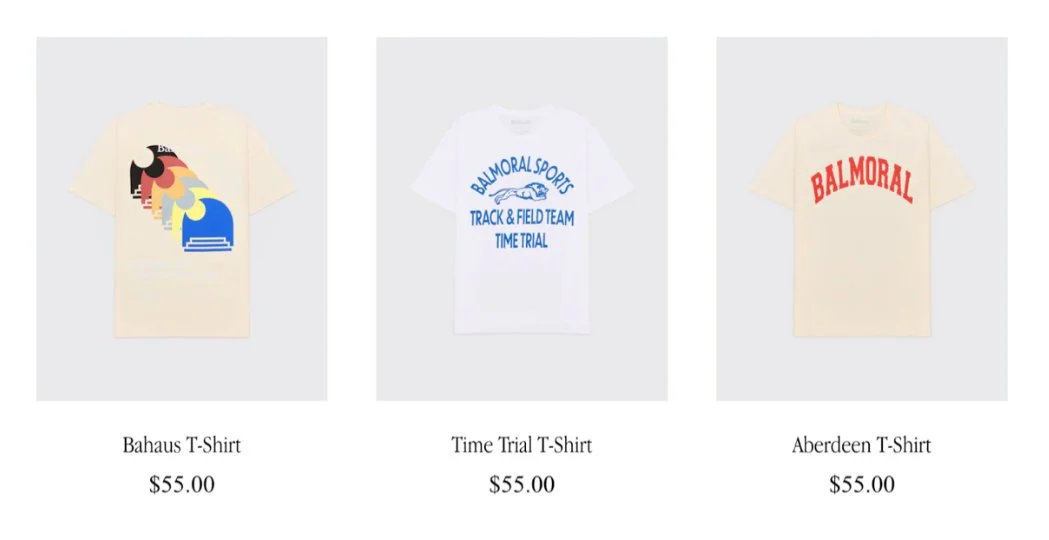
It’s strange to see non-Americans use American fashion, landscapes, or “culture” for their brand.
Balmoral is a premium running gear brand out of Montreal, founded by two millennial men. They were kind to me at their booth, walking through the lifestyle and performance pieces one by one. That’s the place of their brand in the current TRE 2025 hierarchy—having to be nice to whoever strolls by. Perhaps a few years from now, they’ll be a bit more exclusive in the Soar/SATISFY kind of way. Their performance apparel felt similar to Tracksmith in quality, weight, and material selection (minus the use of wool, which is Tracksmith’s best asset).
There’s also nostalgia attached to Balmoral. Reviewing the website, I’m seeing tees that remind me of American academia and 90s nostalgia, which personally doesn’t resonate with me.
I’d rather thrift actual clothes from the 90s than buy new clothes meant to invoke the 90s.
They have an environmental/sustainable bent that feels sincere, but as always, it’s hard to be more sustainable than simply making your current items last longer. They use no virgin polyester—only recycled. Not sure what puts more microplastics into the water supply virgin polyester or recycled…
I think Balmoral should lean heavily into durability and over-engineering their garments. Make something that will last 50 years if that’s realistic. But then again, I think that should be every brand's focus. If I ever founded an apparel brand, that would be the basis for it.
They were having all cut-and-sew work done in Canada but have since moved production to Portugal. The product looked cohesive on the rack. They’ll continue to grow.
SATISFY/Soar: The “Cool” Kids Table Booth
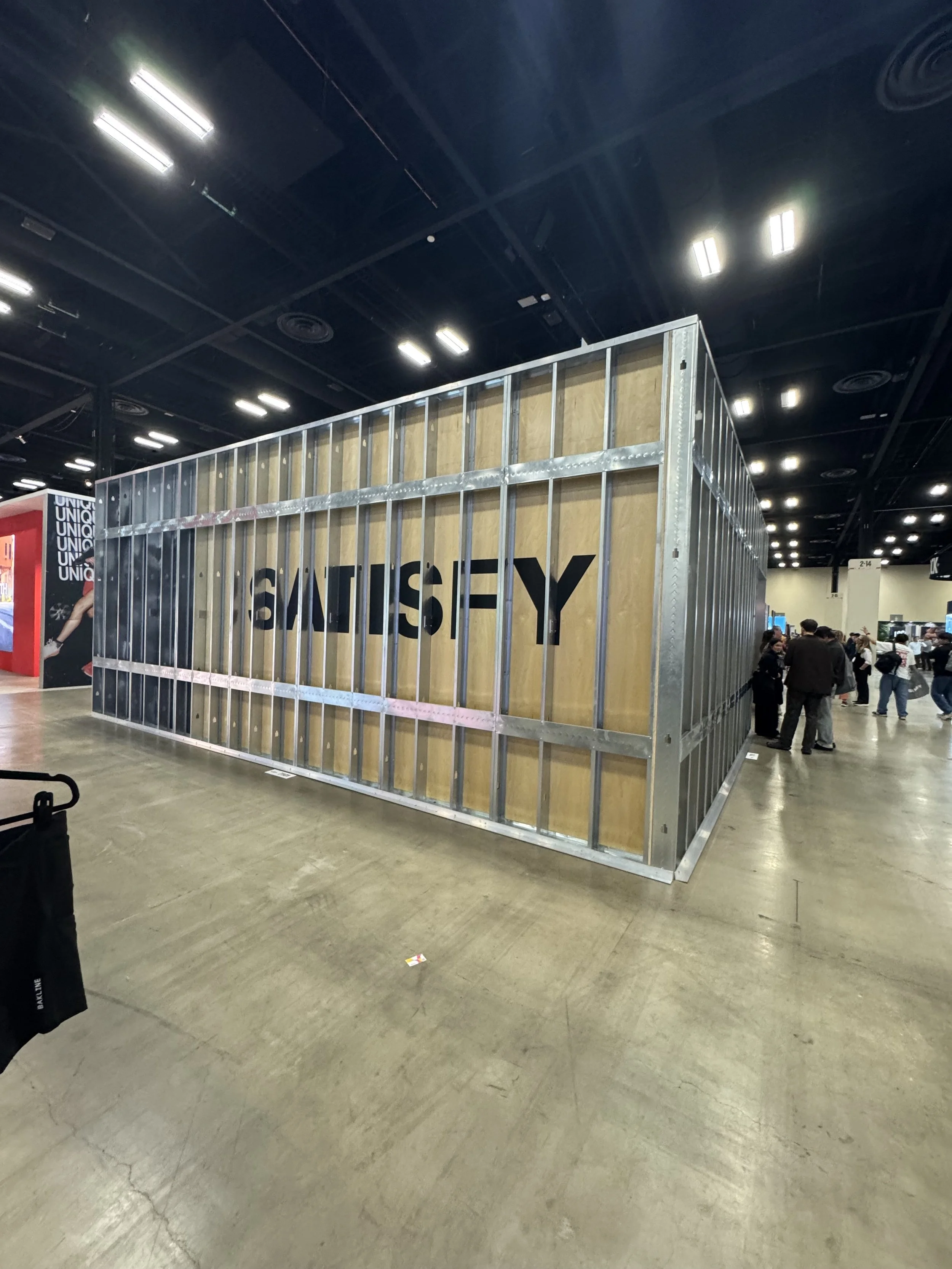
TRE booths are physical manifestations of a brand’s values.
The booth is encased by metal support structure surrounding wood walls with SATISFY printed in black on the outside. The entrance was maybe 5–10% of the perimeter of the box. Their team perpetually leans against the entrance, making it feel even smaller.
By contrast, Brooks is big and open to everyone with ten different entrances. Nike has two distinct sections of their booth as they expand their trail investments and try to keep the Vomero Plus/Premium momentum going. They have four entrances.
There is one entrance to the SATISFY booth. That entrance faces away from the front of the hall.
I genuinely felt like I needed to know someone to go in.
Their male staff sport neck tats, curved caps, and tasteful piercings, looking like they’re about to smoke a light blue American Spirit. Women with extremely moisturized faces and ponytails pulled back tight.
SATISFY is nowhere near a giant compared to legacy footwear brands, but their apparel turn heads.
There’s a type of runner who thirsts to feel cool, and SATISFY serves them. They showed off a “HEAT CRUSH” shirt that is cool to the touch and gets cooler as you sweat. Their pieces exist at the poles of design: quiet and minimal or loud and almost silly to the point that we have to talk about it. $120 gloves and a $420 windbreaker. MothTech™… I don’t really want to talk about it. It’s all very 2020s sans-serif uniformity in design to me. It’s almost insulting to me, but other people fuck with it, and it’s relatively high quality.
The product is good. The brand’s reverence for cowboys, Americana, and punk sleaze isn’t interesting to me personally, but SATISFY is punk rock in the running world, while most everyone else is kinda lame. SATISFY delivers a differentiated vision for the sport with every release. It’s just not my vision of the sport, but the “cool” factor is backed by the product, the team, their Parisian founder, and their presence at TRE.
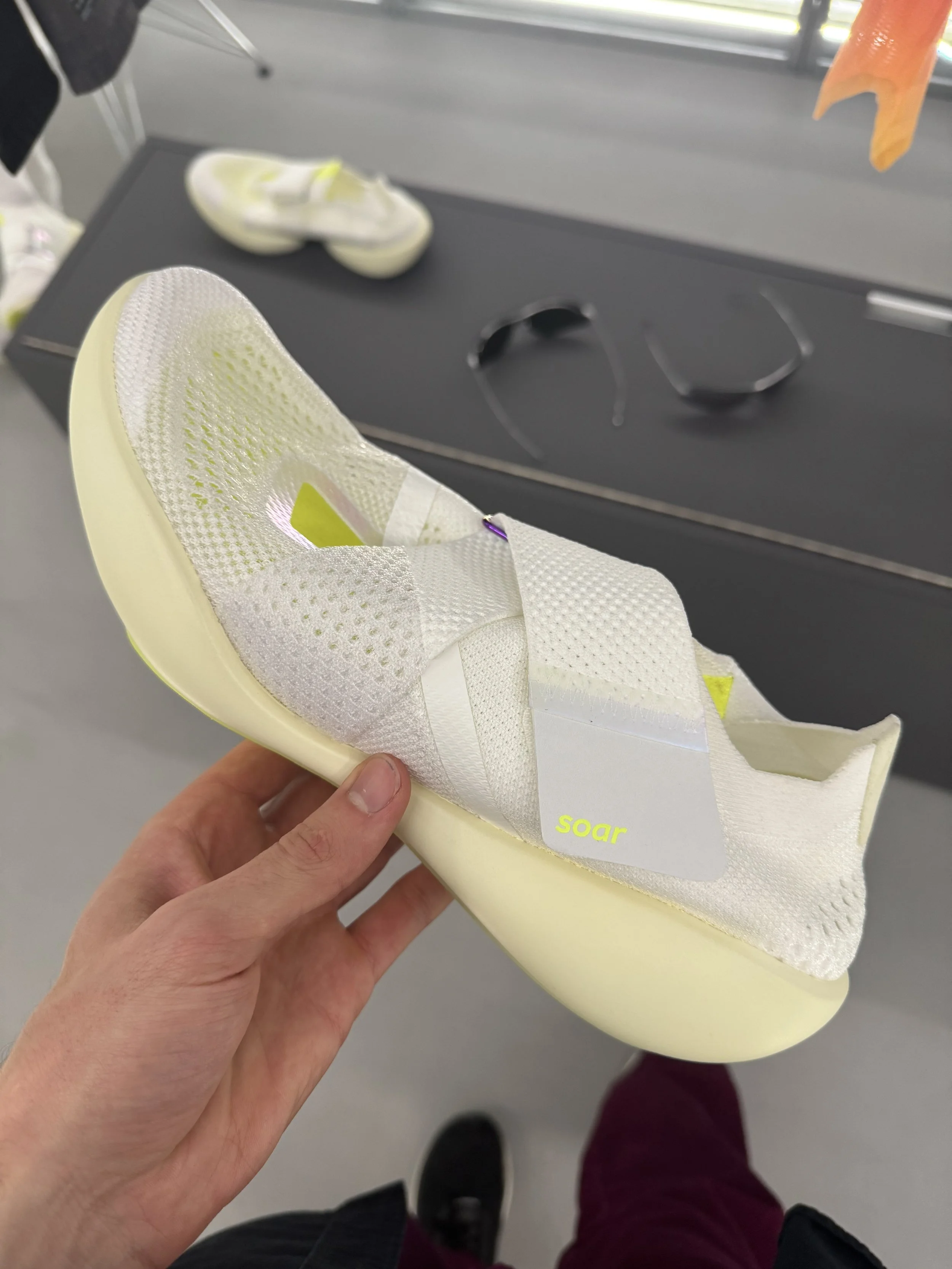
On a smaller scale, Soar felt similar. Their glowing translucent box of a booth was way in the back of the hall, far from major shoe brands.
Two small entrances. Diffused lighting. One central rack of maybe twenty items suspended via thin cables attached to the ceiling. A ridiculous shoe meant, I think, for recovery/post-run. Two pairs of $320 sunglasses that looked like props from The Matrix.
Two men with British accents sitting in minimalist chairs with their legs crossed. They talk to a friend when I walked in, and neither acknowledged me. They talked to someone else who came in while I leaf through the garments.
Soar is not a challenger brand—they’re an innovator, known for quality: bonded seams, interesting weaves, textures, and color choices. Premium prices for premium garments. They emphasize and embody performance. They’re cool.
Tracksmith: My Dad’s a Lawyer Track Club
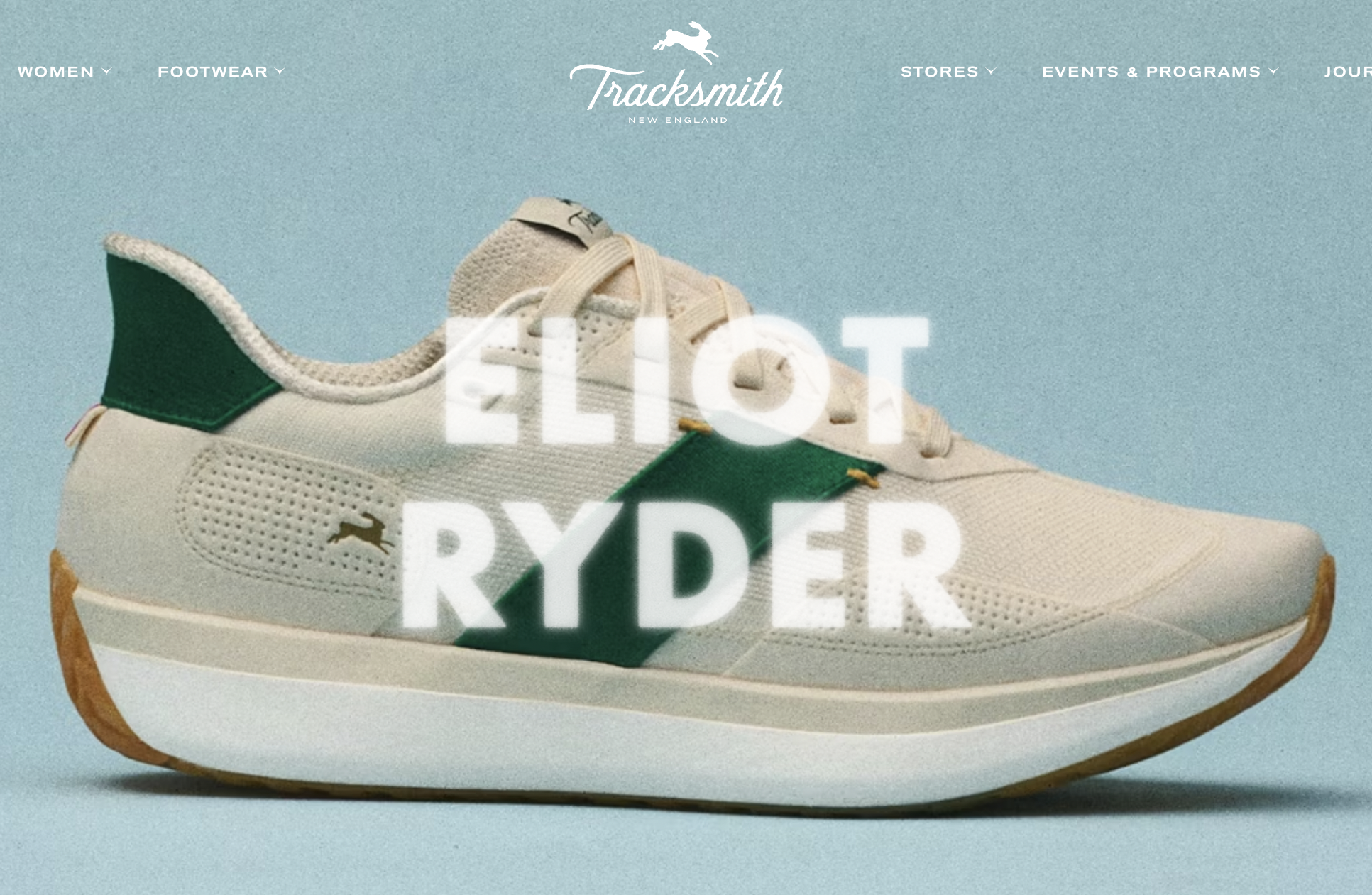
Tracksmith pioneered D2C running apparel. I bought one of their Twilight tanks last year and raced a decent 5K in it. I liked the material, but the off-white looked awful against my white skin. I tried to have a friend dye it red. He accidentally melted it.
Anyway, Tracksmith is coming out with a max-cushion shoe, the Eliot Ryder. Like the Eliot Racer, it features a drop-in midsole. The shoe “hides” its max cushion and looks more like a late-80s jogging shoe than a modern performance trainer. Part of the reason I don’t like the design is that it looks strange unless you’re wearing almost head-to-toe Tracksmith. It might look alright with jeans—occupying the same space as the Saucony Jazz.
None of the colors appeal to me. They’re regal, soft, nostalgic, Ivy-League looking. If I had to choose, I’d go Burgundy…
My greater concern is the heel-to-toe transition. It looks like the platform lacks a proper heel bevel and might be slappy or uncomfortable for heel-strikers. Maybe we’re looking at a rendering and the actual product will differ. Maybe they’ve tested it, and it rides smoother than I imagine.
In all the reviews I’ve watched of Tracksmith shoes, it’s an open secret that they don’t perform as well as the big brands. They also cost significantly more. You are paying a lot for nostalgia and aesthetic.
I think the brand’s identity has become a limitation to its growth.
$220 could get you two pairs of discount shoes. It could get you the Asics Megablast. Tracksmith still feels like old money turned into nostalgia.
Run Culture? Maybe. Overconsumption? For sure.
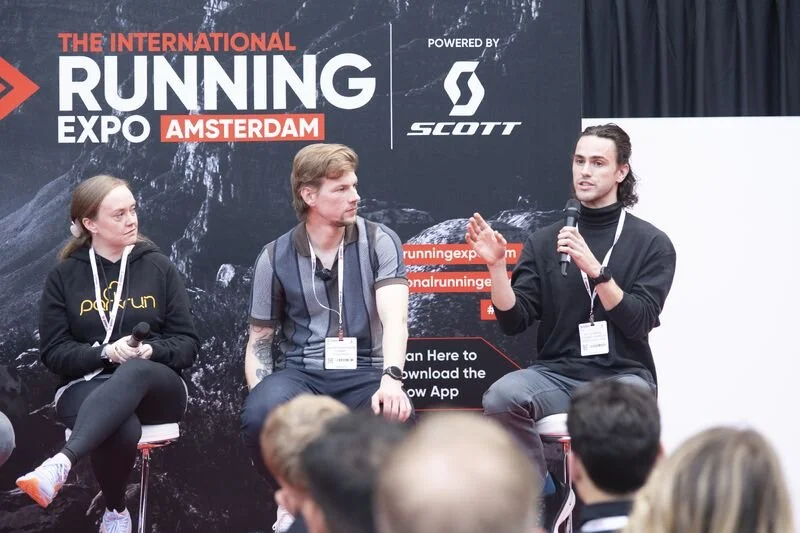
Run culture is a funny concept.
It certainly involves running and the products we deem necessary to do so. For many, run culture centers group runs and the internalized road-racing/track/XC calendar. But there’s no unified run culture, and TRE demonstrates this. The brands that have been around for even two decades—let alone 100+ years—have very little in common with the post-pandemic boom brands. Most runners don’t race. Most runners don’t wear and don’t care about super shoes. There is a silent majority in running who don’t know the name of the shoe they’re wearing and might not even know the brand. Women and people of color in running feel under-resourced, often disrespected, and unsafe when they try to show up and engage. This was stated openly at the Building Kinship panel on Wednesday.
If there’s a truly connective culture in running, it’s one of overconsumption. Lots of plastic waste. Apparel made to last a season rather than become an heirloom you pass to your children. Unethical, untraceable supply chains ending with shoes that feel great for 150 miles. I’m a full participant in this culture. Every gel wrapper from my last marathon build is in a landfill somewhere. I work at a run specialty store. I take out the garbage weekly, seeing the thick paper inserts that come in every pair of shoes thrown away immediately after the first time a customer tries them on. They served their purpose.
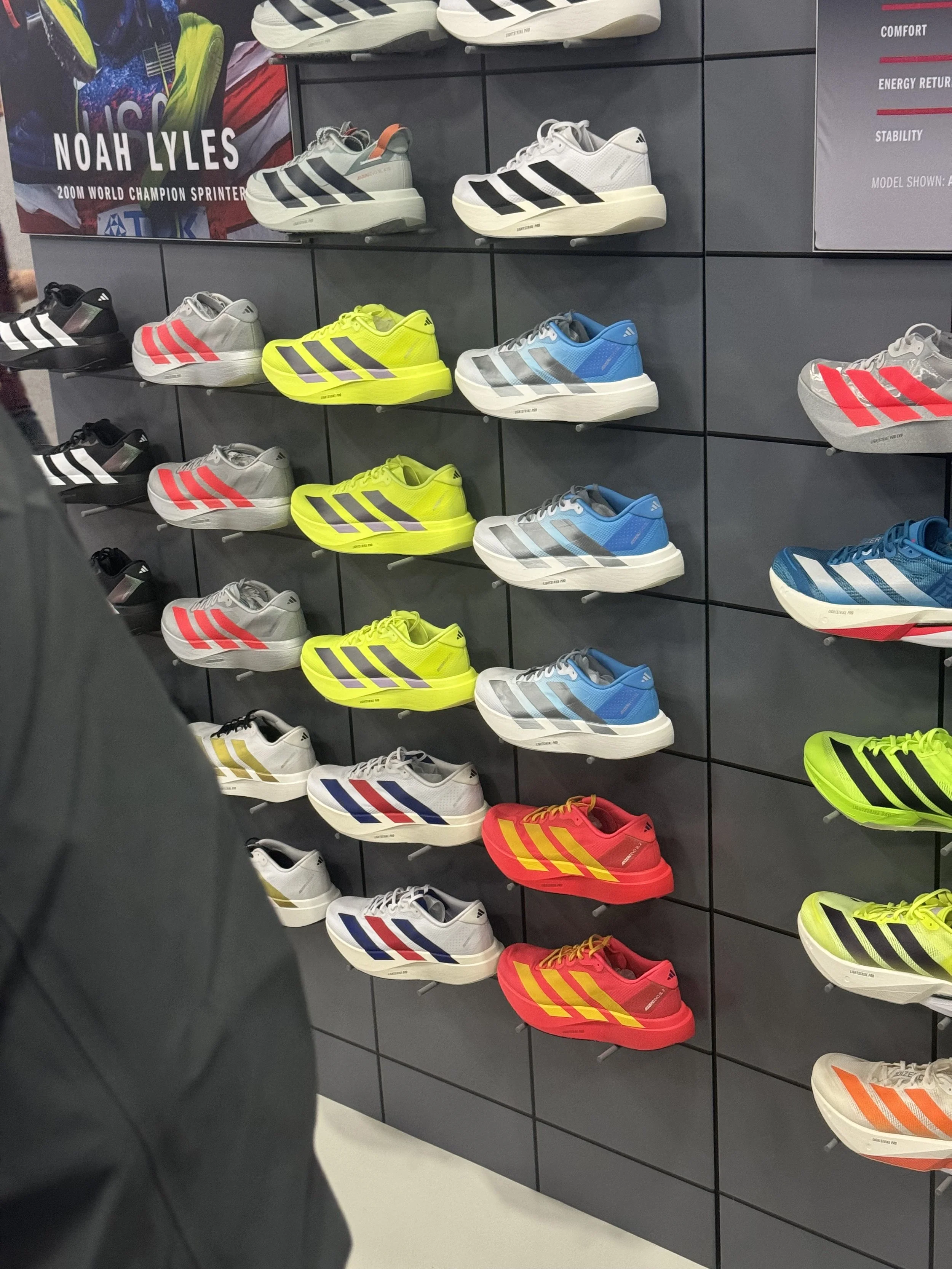
Culture and community formation is possible primarily on a local level. Kinship is possible among people with shared interests or shared identity, when they rely on one another and know they can trust one another. But community is not possible without accountability and conflict.
Brands are not building community. They’re building customer bases and ideally brand loyalty. They’re convincing people to buy things they somewhat need.
There’s a lot to be excited about in running going into 2026. TRE showcases this, even if the event exists primarily for the industry to convince itself of the excitement. I was impressed with many of the small retailers I met—the dedication of their teams, their sophistication in buying strategy, their reverence for the sport, and their kindness toward strangers. This mentality is required in local retail, where you need to sell to whoever walks in the door, and that’s an important role. Online shopping doesn’t reinforce this kindness, no matter how captivating the web copy or how smooth the AI chatbot is.
I must ask: What culture are we heading toward beyond overconsumption? Beyond a direct-to-consumer brand for every type of runner?
The local run retailer, the local organizer, and the local race company are more important than they know. If we want there to be a running culture, we need a set of beliefs shared across these groups—and those beliefs can be forced upon brands, holding them accountable to consumers.
I find running to be selfish at times. If we aren’t running to prove that someone who looks like us can do it and should do it—if we come from a lineage of people who have always been allowed to run—what’s the use beyond our own satisfaction? Maybe the satisfaction of doing something difficult is enough of a reason in a world where we can choose to rot online all day. It’s great to be outside, to feel one’s heartbeat, and—even briefly—have the stories we can’t stop telling ourselves blur or stop for a moment.
Maybe running can be about something a bit bigger than the self or the high or the PB.
We just have to decide. We just have to build it.
— Matt Bourland