Race Report : Jonathan Gaillard
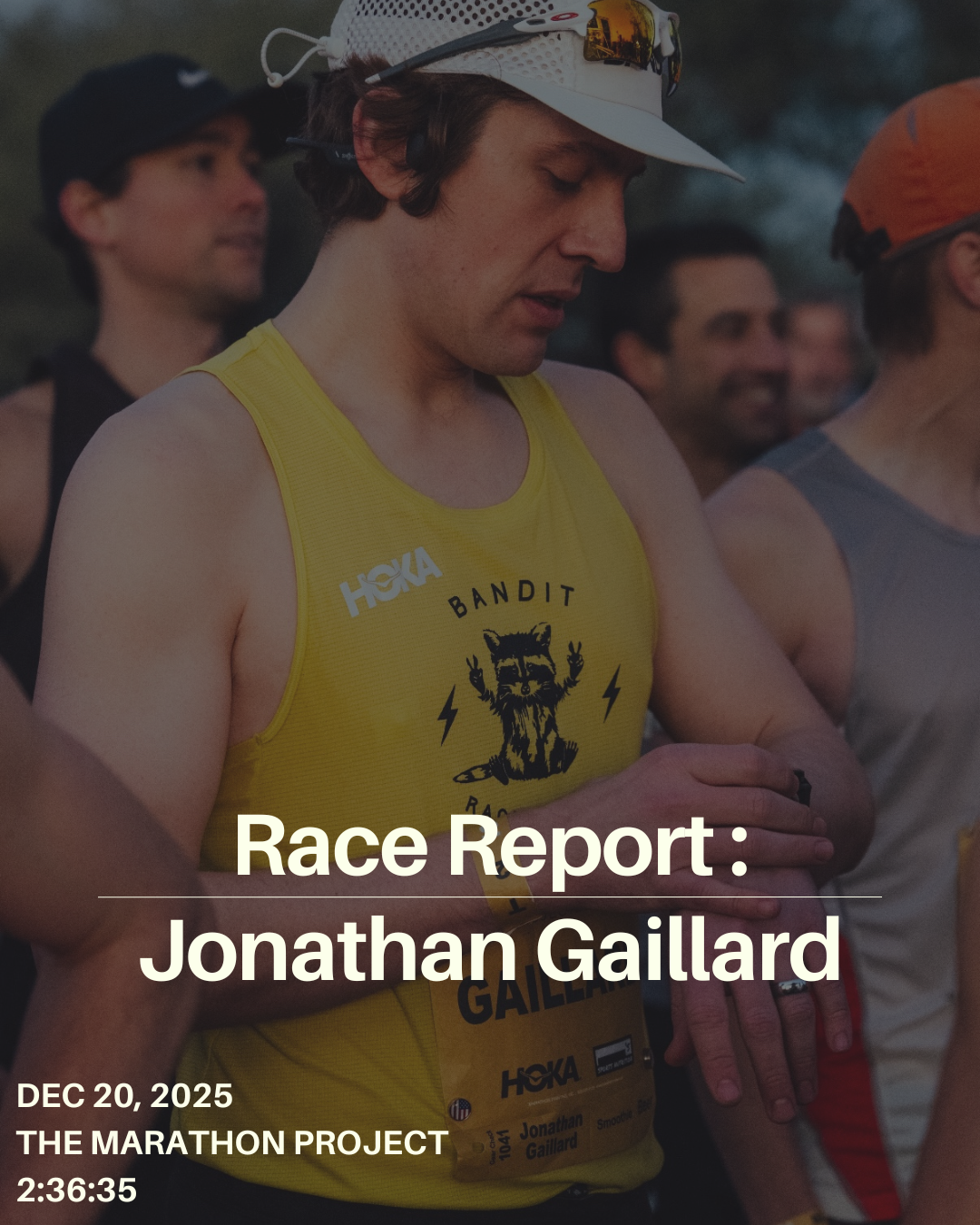
The Marathon Project
Saturday, December 20, 2025
Chandler, AZ
2:36:35
Race Report Interview
Brent asks Jonathan 10 questions about The Marathon Project, 7 hours after he crosses the finish line.
Jonathan,
To quote your Strava recap…
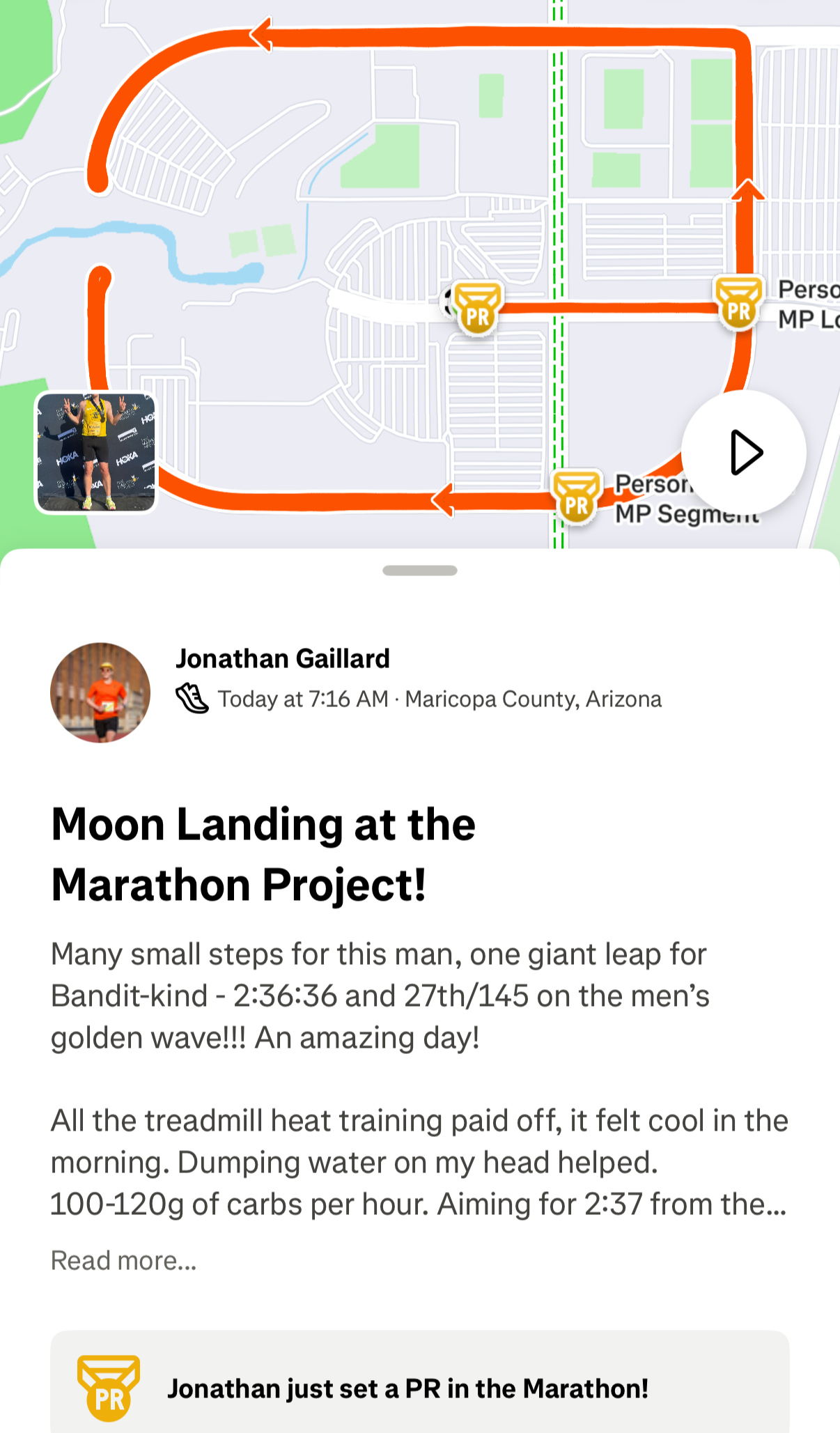
“Many small steps for this man, one giant leap for Bandit-kind - 2:36:35 and 27th/145 on the men’s golden wave!!! An amazing day!”
For those of us who have been lucky enough to witness this 2+ year journey, we know how much hard work, discipline, and precision went into this achievement.
If you have any energy left after Saturday’s race, we have 10 questions for you.
10 Laps with Jonathan Gaillard
1. Can you walk us through the emotions you’ve felt since crossing the finish line, and any reflections you’ve had since clocking a 2:36:35?
I had gone out with the plan to break 2:37:00 and somewhat anxiously checking my watch against the mile markers on the course to see just how far off. With a mile to go I knew I could break it but the question was by how much. I pushed and pushed without the wheels falling off and saw the 2:36:36 on the clock as I crossed and I let out a triumphant roar, 2:37 was broken! I felt strong and confident but I still almost couldn’t believe it. I still don’t think it has fully set in. But as more time goes on and I realize just how good I feel there is always that second guessing “could I have pushed a little more a little sooner?” but I imagine if I did that something could have become derailed and so I am just happy with my performance and excited for the next year (after some rest of course)
2. My understanding was that your long term goal has been a 2:37 marathon. Is that assumption correct? And how did that goal come about?
Breaking 2:37 has been a big goal that was next on my list but not the only one. The 2:37 goal came about from Project Moonshot. Though 2:40 as my goal for the year, I figured at some point I should break the original 2:37 goal as set by Jonathan McBride and Jack Miller.
3. Your milestone is a huge victory for you, but also a huge victory for Project Moonshot 2024. For the unfamiliar, can you explain the Moonshot lore and how it inspired you?
I myself don’t know the exact conversation that ultimately led to the project moonshot but from what I do recall it was a Speakeasy Sunday run, with Jack Miller, Jonathon McBride, and Mikel when Jack and McBride decided it was a good idea to rip a small workout as part of the training for Project Moonshot.

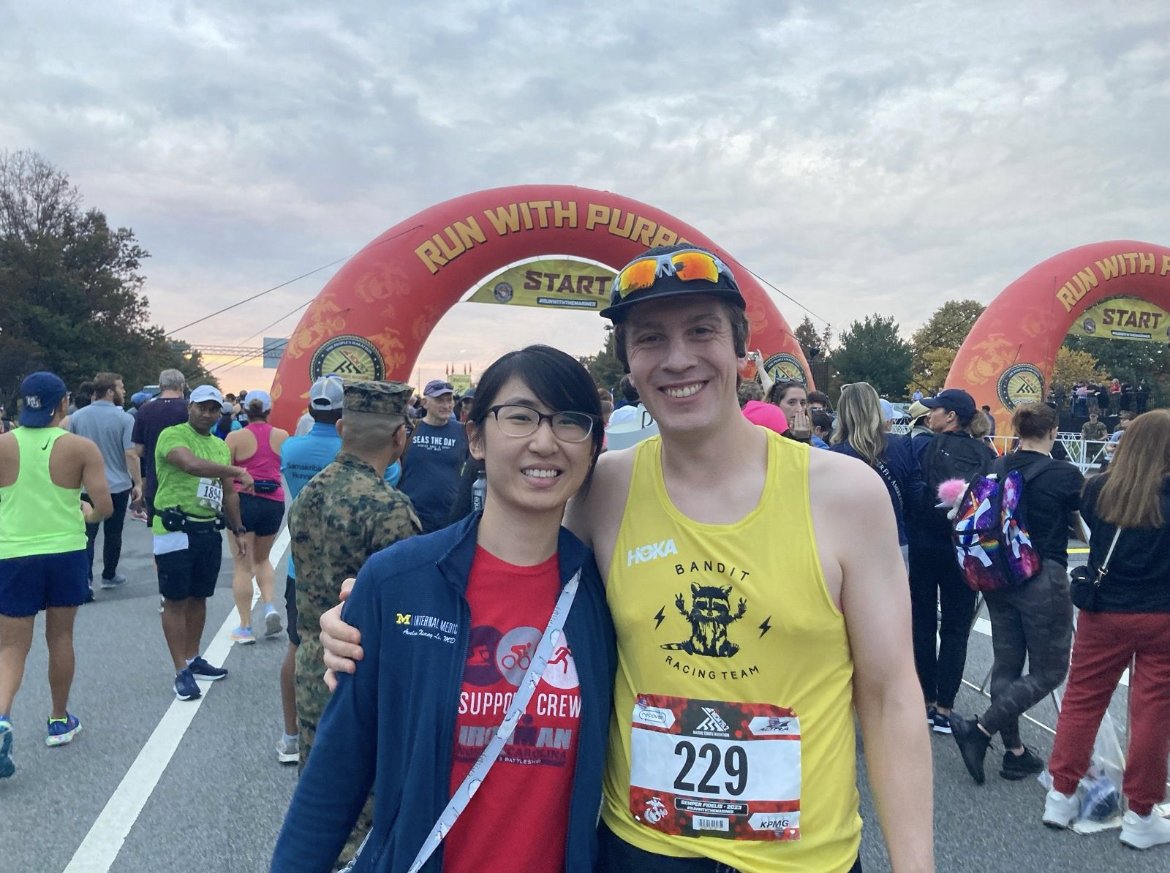
After the workout, that's when I learned that the Plan for Project Moonshot was to break 2:37 in the marathon as a goal. Its a good number where your average mile switches from 6:XX to 5:XX. The goal was to do so while we were all young, fit, and maybe a little crazy. I thought to myself that I wouldn’t be able to break 2:37 at the time but maybe 2:40 would be a good goal. I had just finished up at Marine Corps Marathon in my first summer/fall season with the Bandits and had been rejected from Boston after missing the additional cutoff by 1:05.
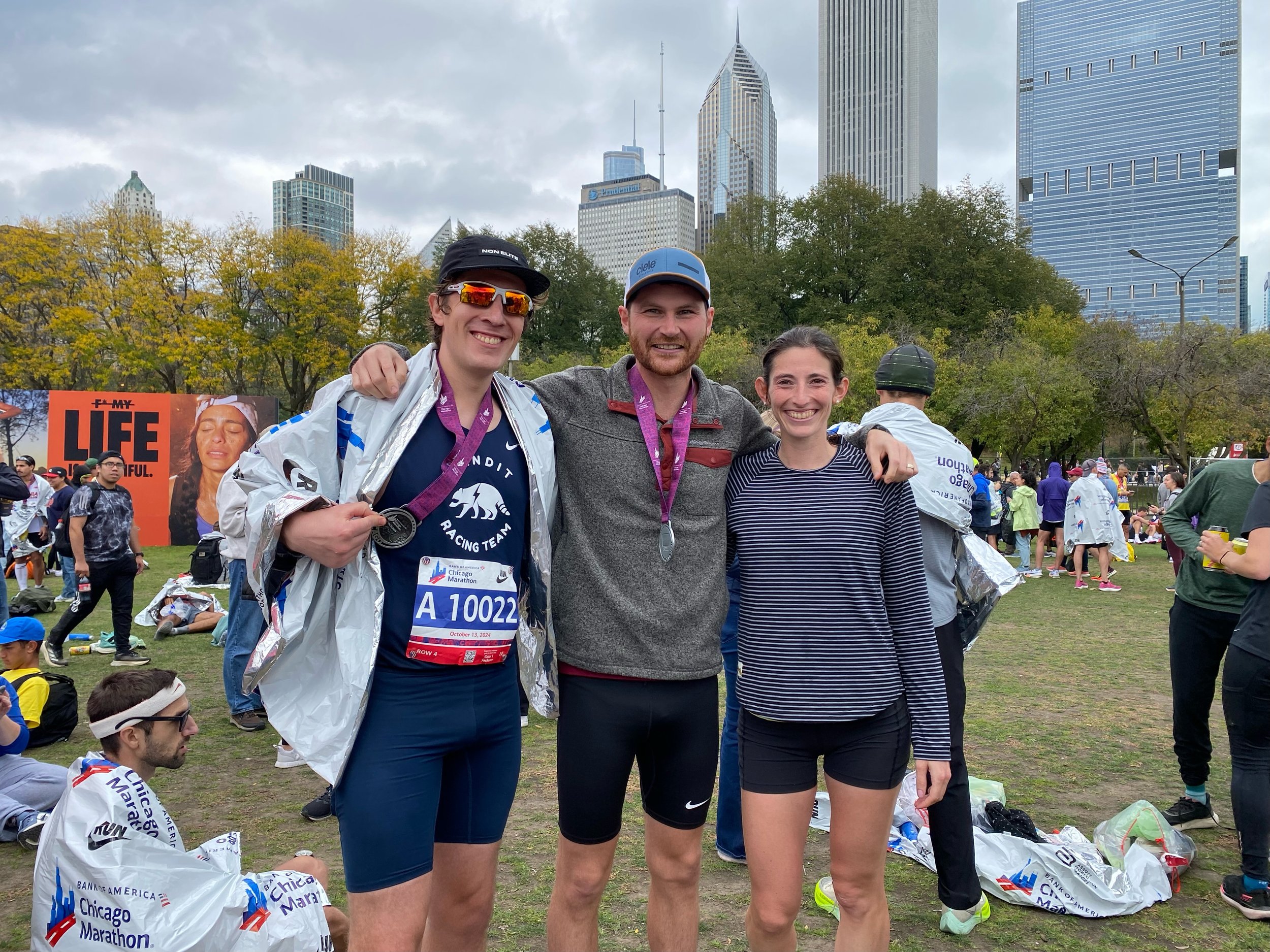
I made the plan to made sure I would qualify for the 2025 Boston Marathon no matter what. It led to changing marathon training plans, many more miles run with friends, and big PRs over 2024. But despite an amazing year, 2024 ended with a PR of 2:41:46 and none of us achieving the fabled 2:37. That set the goal to break 2:40 for 2025
4. The Marathon Project is a true one-of-one race, with it’s own unique origin story and purpose. Can you give us some background on TMP and how you got involved in this year’s race?
The Marathon Project has its origin story back in 2020, the year with minimal racing as the COVID pandemic shut down many aspects of the world and society including the Olympics as well as other races. Having reached the end of the typical contract period (often renewing right around/after the end of an olympic year), many pros weren’t able to show off all their progress which might earn them continuations or changes in their contract. Ben Rosario and the other founders of TMP came together to create The Marathon Project as a small, controlled, flat, fast, race where the pros could show the work they had put in and that they deserved to stay and continue running. They had a small number (<100) of elite athletes attend what would become an historic race with the men’s side winning in 2:08:59 and the highest number of American men to go sub 2:10 ever. The women’s side saw Sarah Hall take the win in 2:20:32, just barely missing the women’s American record at the time. It was thought it was just a one and done event. But it continued to percolate in the background and after the end of the 2024 cycle, Ben Rosario and other co-founders announced its return for 2025.
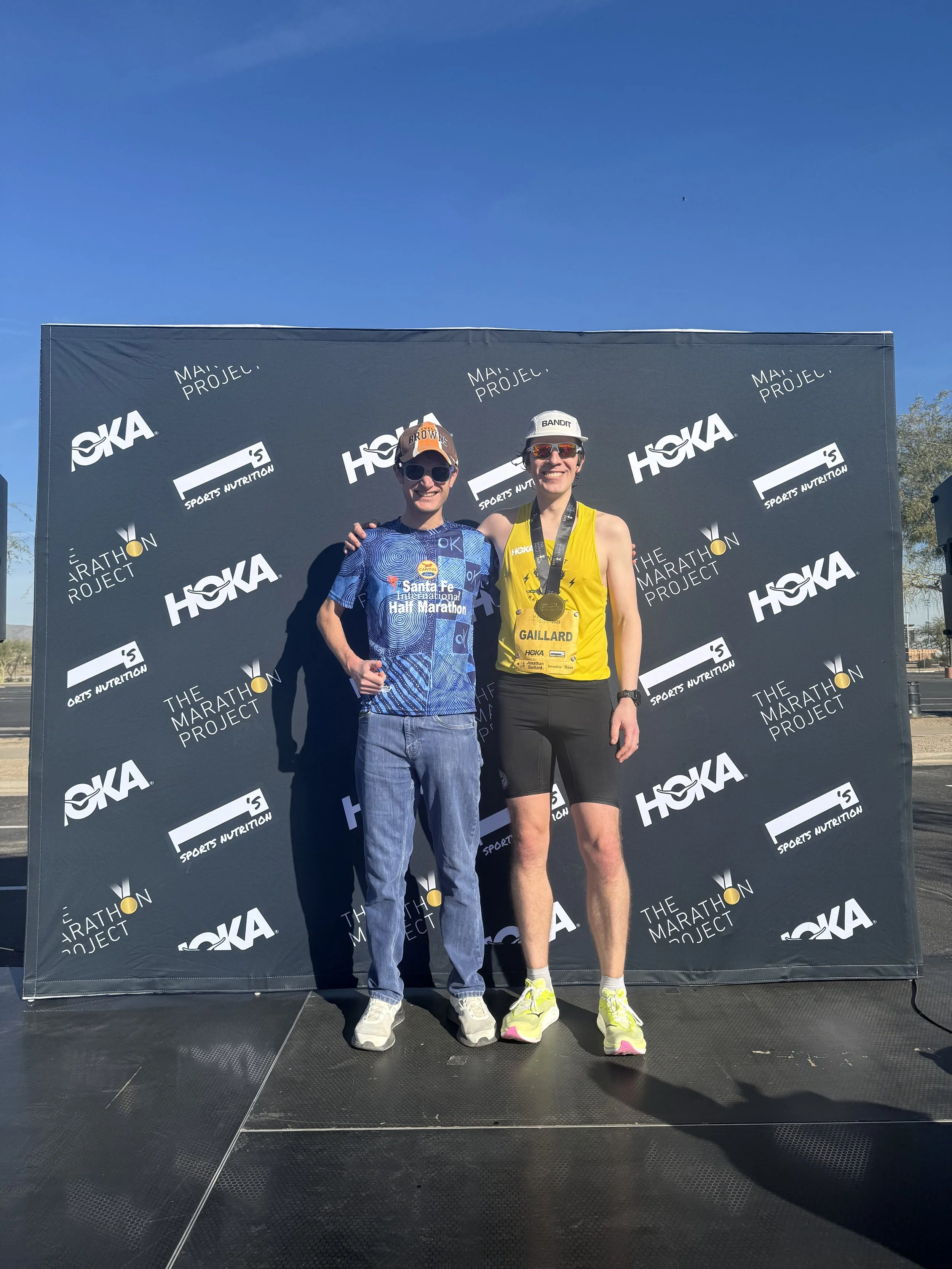
The Marathon Project had been on my radar earlier in the year but I didn’t know where I would be working after I graduated on June 30, 2025 and had already planned for Berlin as my main vacation in my new job. However, after my attempts to break 2:40 for the year were foiled at one race after the other at Boston, Grandma’s, and then Berlin, I found myself contemplating a few different options (ultra, 5k/10k block, another marathon). I knew I had the fitness to break 2:40 in Berlin but the heat would not allow it. After talking with my coach who mentioned he was running TMP, I looked into my own schedule and saw I was off and could move around vacation time to make it. I knew with its reputation that it would be worth it.
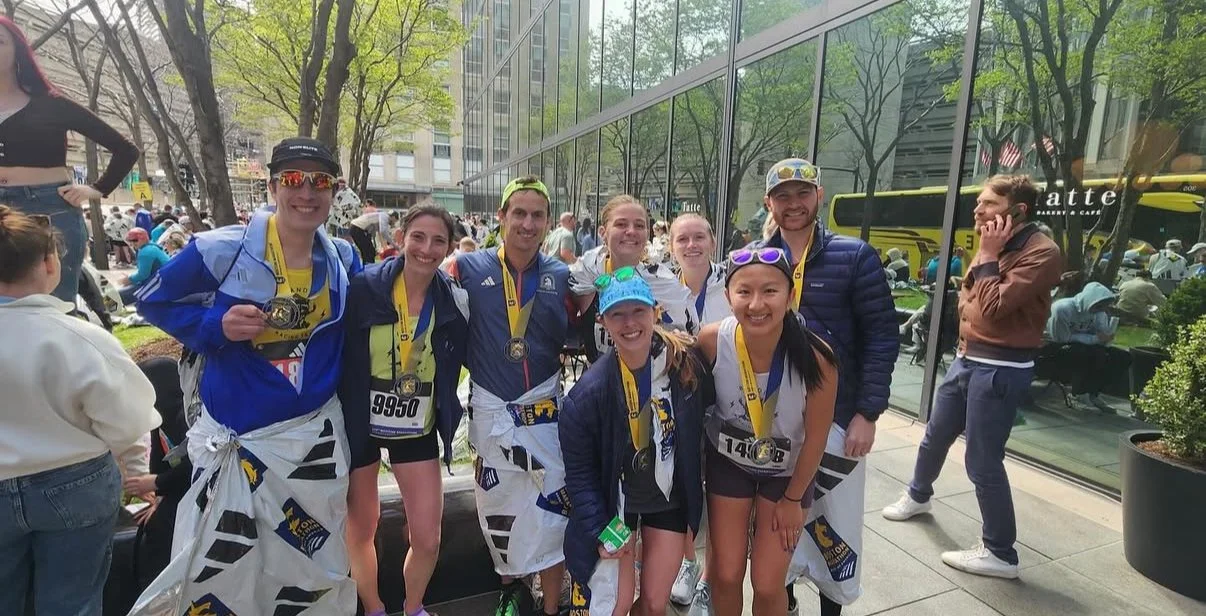
Boston Marathon, 2025
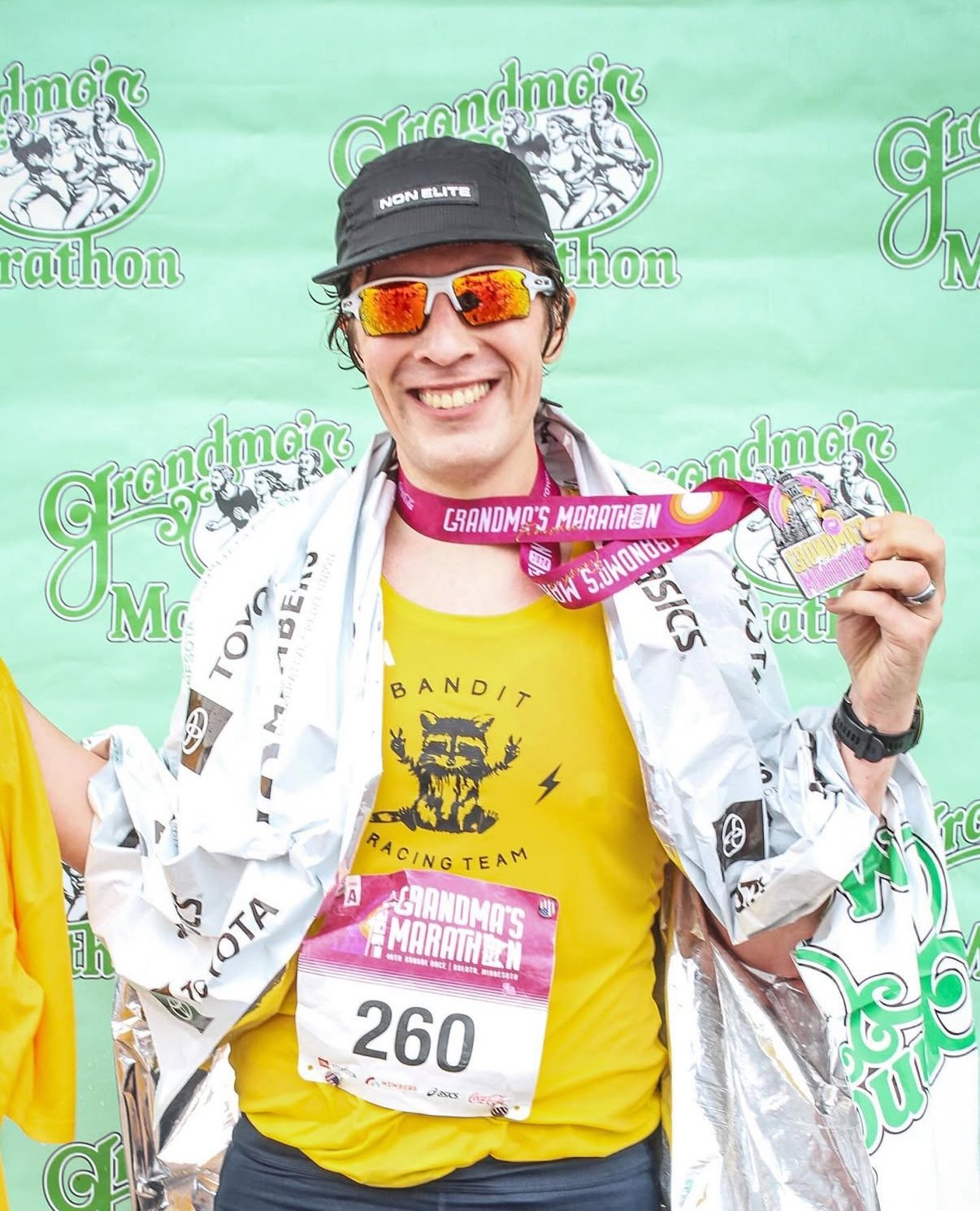
Grandma’s Marathon, 2025
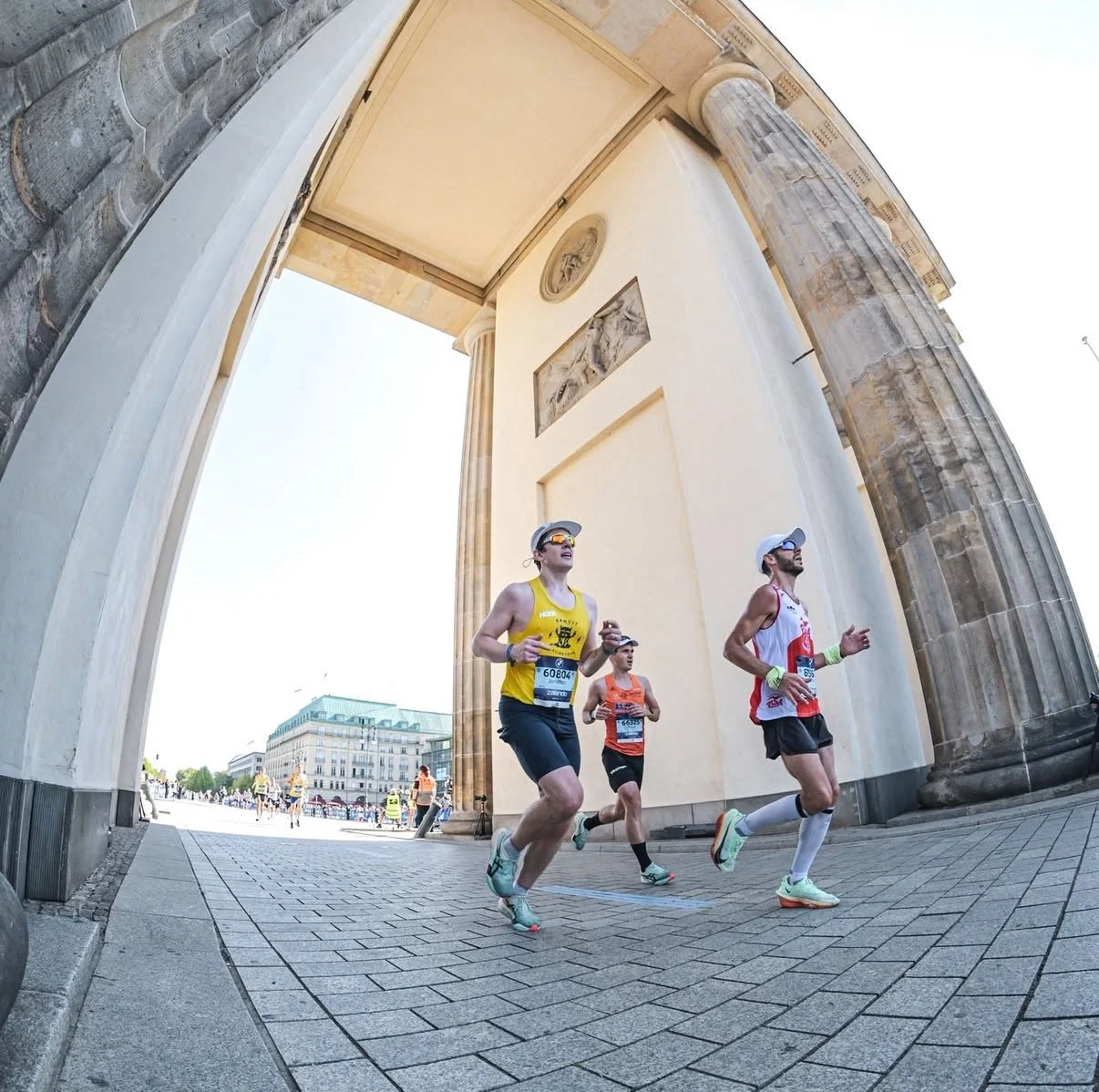
Berlin Marathon, 2025
5. Given that The Marathon Project is such a unique race, how did this feel different from other marathons you’ve run?
This was my first “super looped” course. Yes I have run marathons where you maybe run 2 loops of the same 13.1 miles or maybe a race like Chicago where it seems there are multiple “loops” going through a central point. But I had never run the same course for more than 2 loops, let alone 6 loops. Even though it was new I came to appreciate the benefits of really getting to know the course and what to expect. After you run the first 4.26 mile lap, you know what to expect for the next 22 miles. You know where each of the three aid stations were. You knew where the tangents were for the curves and turns, how to take the roundabouts. But one of the best things was the support from the crowds considering how small the race is, you could end up seeing the same people up to 12 times with them just staying in the same spot. I definitely appreciated one family that had the best signs and would change it every loop - I looked forward to what the next one would say each time.
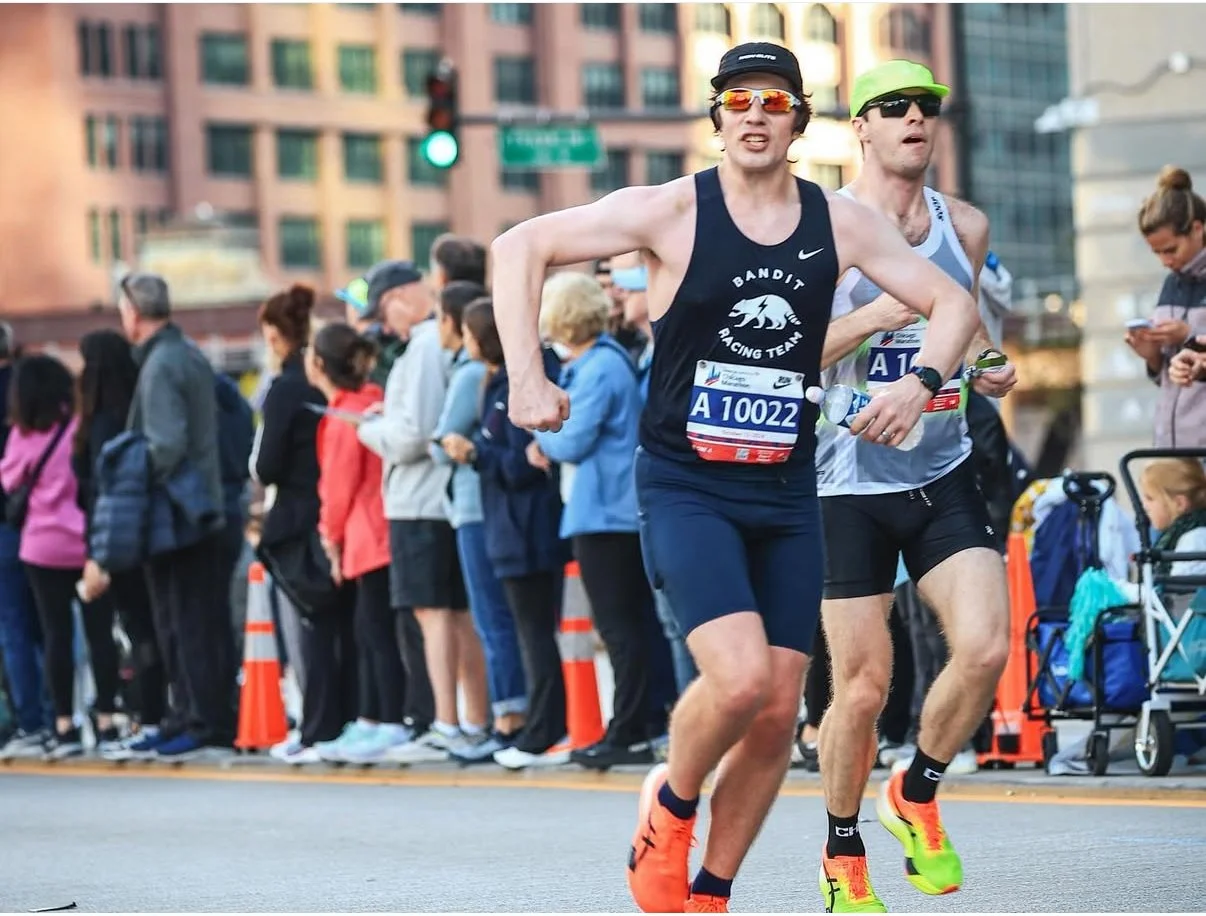
I also knew where there would be someone who would cheer you on by name no matter what (our names were on our bibs). I also knew where the leader was, seeing the bike on the other side of the road just in front of him. Lastly it was also incredible to see all sorts of pros and running personalities out there cheering on the golden wave participants. Notable people I saw and recognized included Rory Linkletter, Adam Wood, Nico Montanez, Habtamu Cheney, and Jamil Coury.
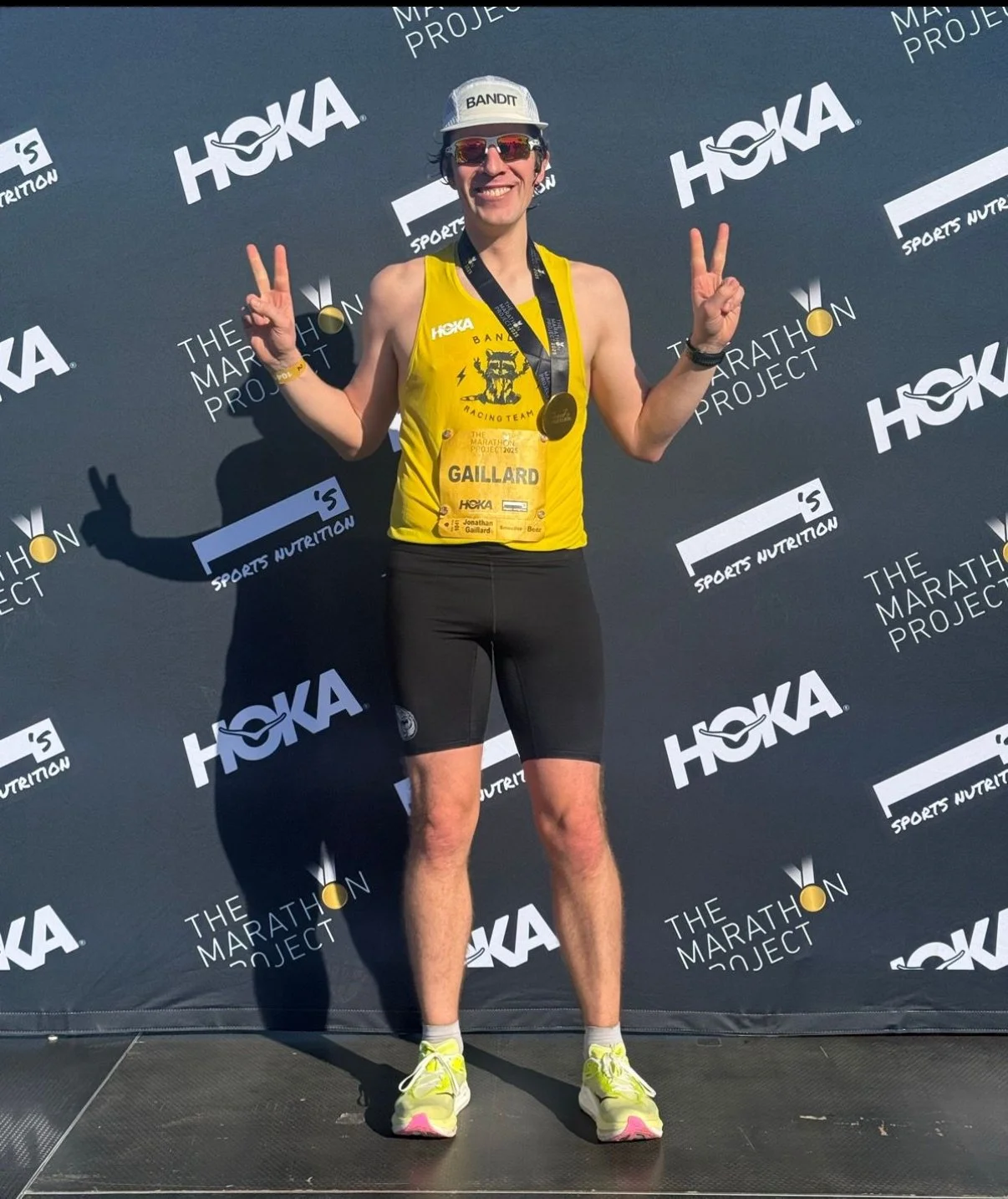
6. Take us through the three hours before you crossed the finish line. What was going through your mind and what was your body telling you during that timeline?
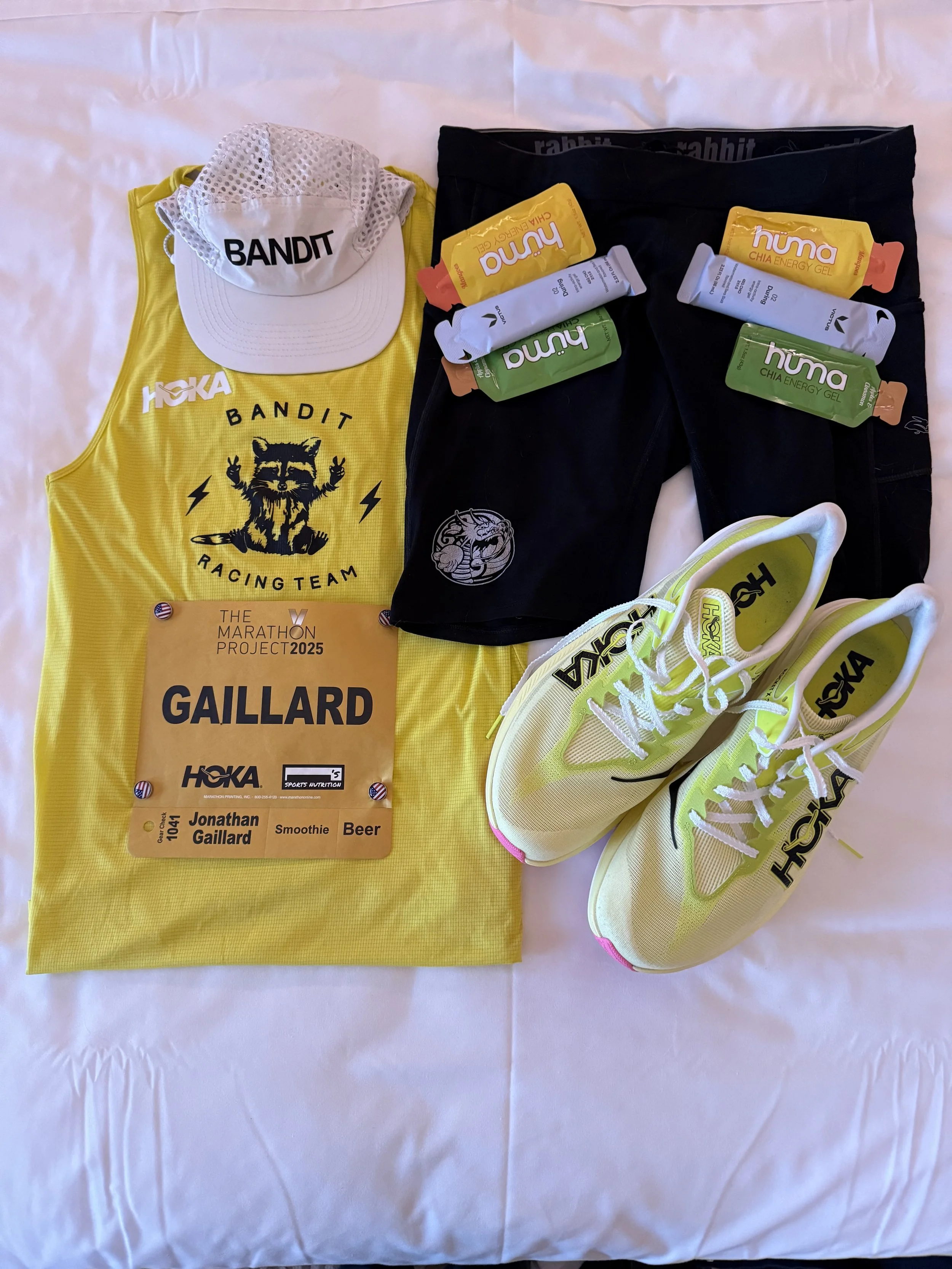
I had finished warming up in the indoor athlete area and we made our way to the start. It felt brisk outside which meant my heat training on the treadmill had worked! The top back part of my left hip was a little tight as it had for most of the week but running on the warm up didn’t bother me. As we approached the start line I began looking for the 2:35 pacer whom I had met yesterday. There had only been 3 of us at the “meet your pacer” event the day before and he had agreed to do 2:37 as long as no other racers showed up in the morning wanting to actually target 2:35. I met up with the other two guys but we found a larger group of 2:35 runners so the three of us decided to take it out at 2:37 after all because we could always fall back to the 2:40 pace group if needed.
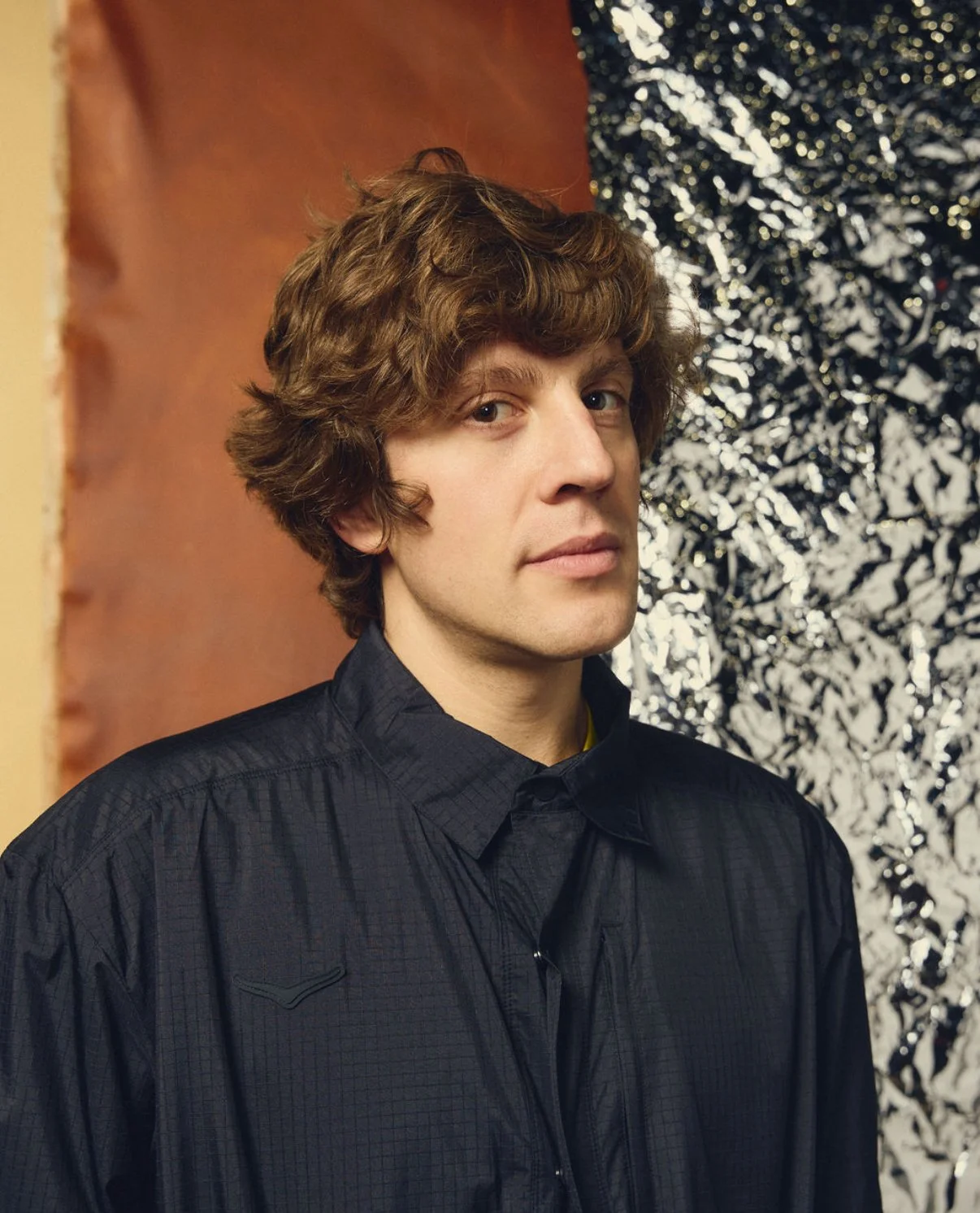
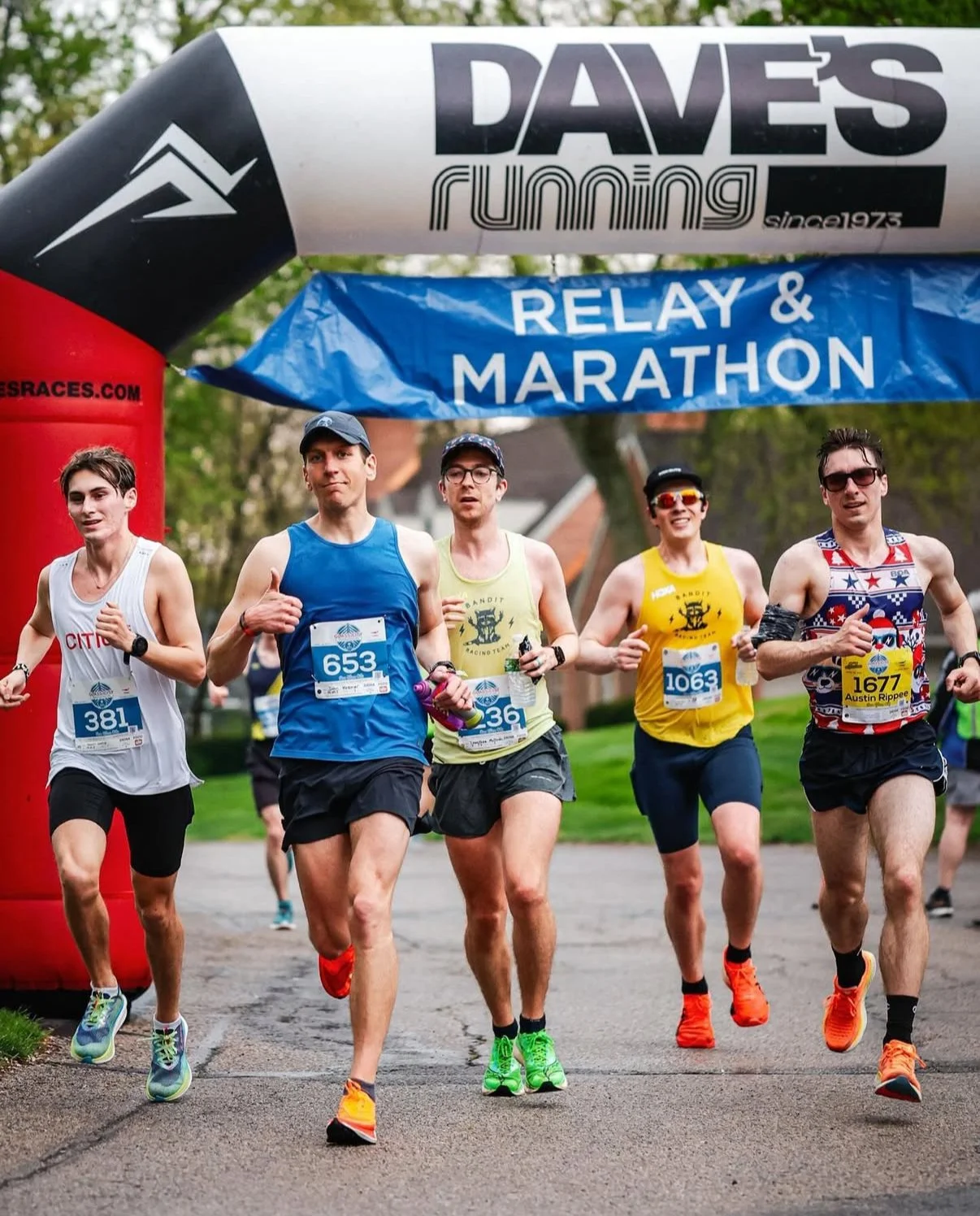
As the gun went off, we all were a little hot as is often the case of adrenaline fueled legs in the first 400-600 meters. We settled into 2:37 pace, aiming for 6:00 min/miles. It made math easy so that I could adjust my expectations and line up my watch with the official course mile markers. We kept a pretty steady pace around 6:00. I know I looked down a few times and saw 5:55 which was fine but anytime I saw 5:50 or 5:45 (especially after the central cheer zone) I knew we had to pull it back a bit. Although there was a group of us all around the same pace shooting for sub 2:38 or sub 2:37 its hard to say if we ever had a real pack, more like an amorphous blob, people more running next to each other than as a unit following the tangents. There was one guy, John “Johnny” Coffin, who followed the tangents like a machine and I tried to stick closer to keep him in sight. I only learned his name later and so I thought it weird that people were cheering me on saying “go Johnny”. I thought to myself, “that’s not my name but I appreciate the support!”. I also heard cheers for “Go Matt” who was one of the original two guys in our small 2:37 group and knew he was also on track for our shared goal.
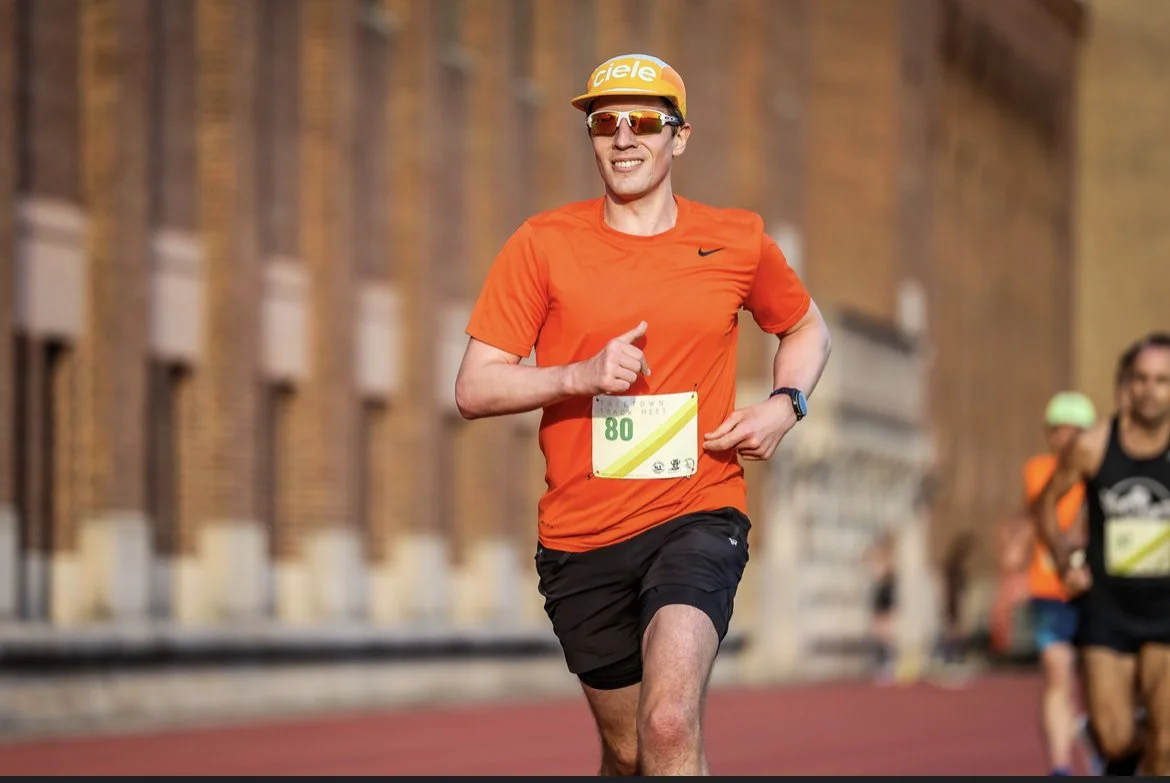
Treetown Track Meet, 2023
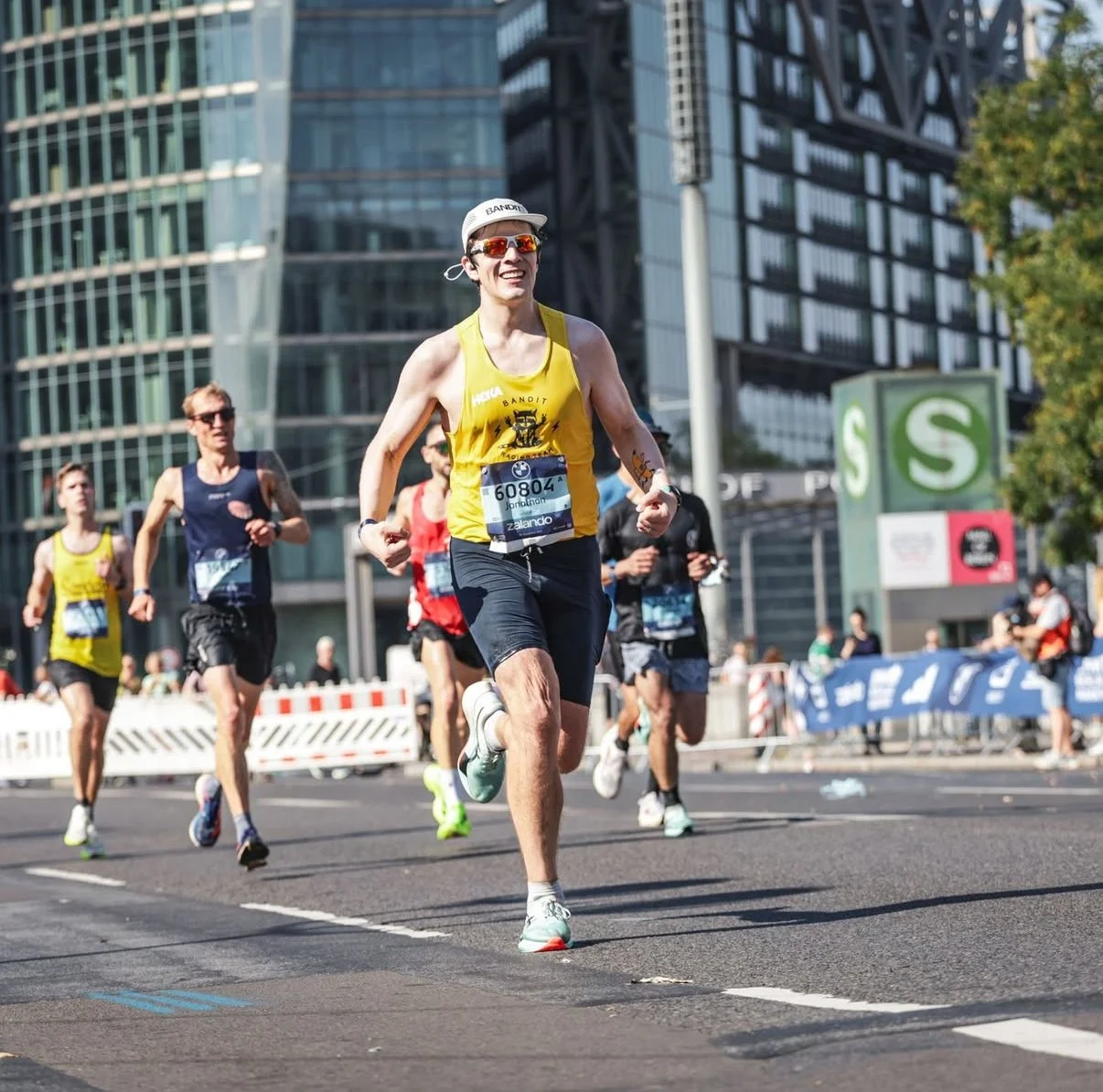
Over the course of the next few loops we would gain or lose some people from our amorphous blob, ranging between 5-8 people. As we left some of the tangents especially for bottles, my watch started beeping way before mile markers which made me nervous but by the time I reached them I knew I was still on pace, hovering between -10 to +2 seconds. I would try to accelerate or slow down to keep on track. Eventually around mile 18 I think I entered one of the elusive flow states and felt like my brain was just floating along and my body was a machine that just kept forward momentum no matter what. I kept anticipating the wheels to fall off as I slowly witnessed the carnage. The other guy that started in our 3 person group had to drop at mile 1.5 due to a hamstring injury. Another guy who had been in our group slowed to a stop, starting around mile 12 or 13, due to his own injury. I saw a man stop with his calf or hamstring locked and yell out near mile 21. Every time thinking and worrying, “that could be me next”. But I kept reassuring myself that I had all the hydration, all the carbs, the strength training, and all the miles on my legs that I needed to keep going to the end.
7. At what point did you know that you were going to make it under 2:37? Did you have any doubts during the race?
I knew I was on track for pretty much the whole race at each mile marker and coming across the half in 1:18:31 on the clock as I passed it. But as noted above, I kept worrying about some crazy fluke accident or the heat to get to me. I figured if anything particularly bad was going to happen it would happen after mile 20. But as I kept chugging along, and I got to mile marker 23, I knew I only had 5k to go and that I was most likely going to make it, or even if something did go wrong that I would still make it sub 2:40. As I got to mile marker 24 I knew I pretty much had it, the question was then when to push and by how much.
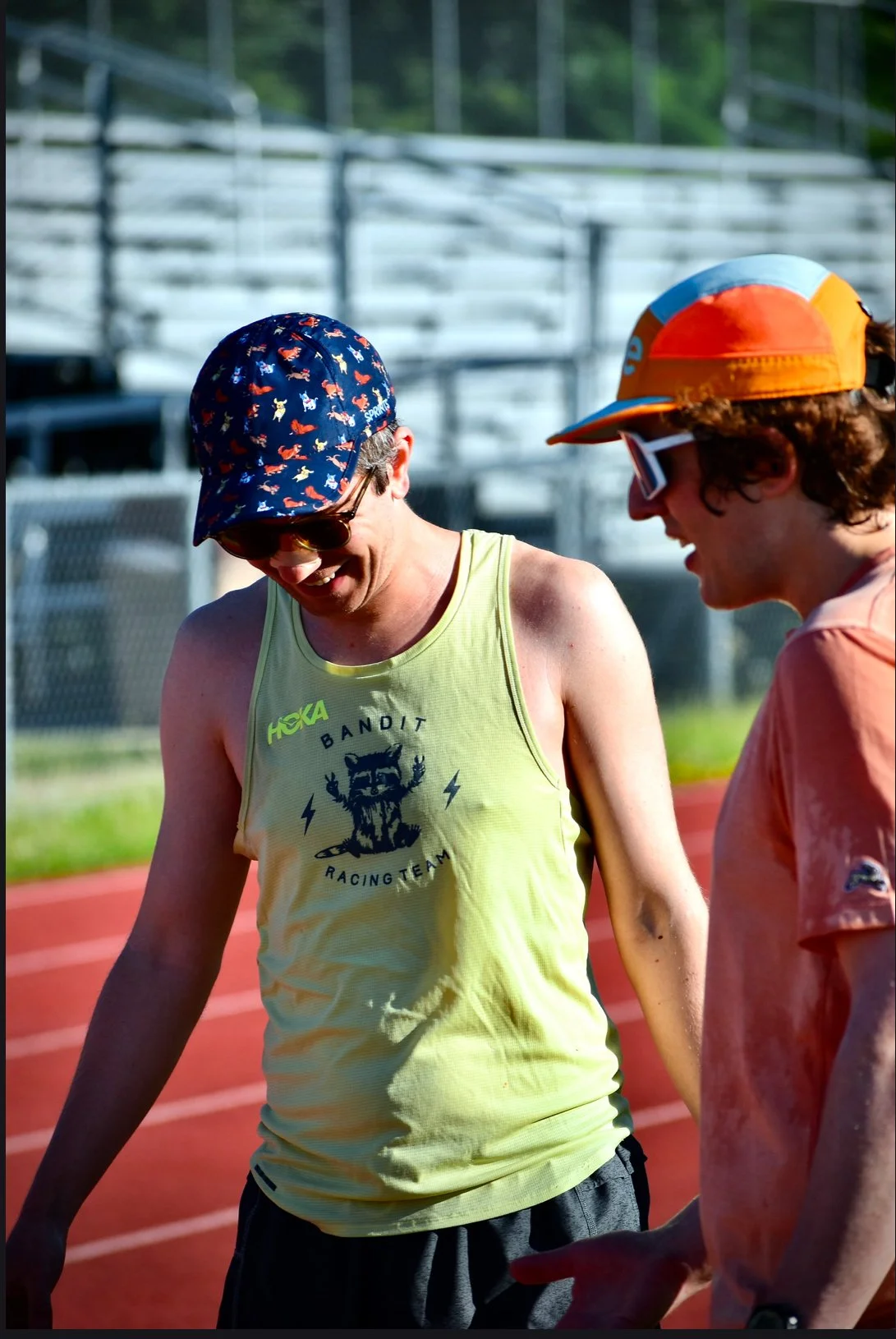
Gaillard’s 1st group run with Bandit Racing Team
8. Reflecting back on the 3+ seasons of monster mileage you’ve logged, what have been some of the high points and low points that you think you’ll remember 20 years from now?
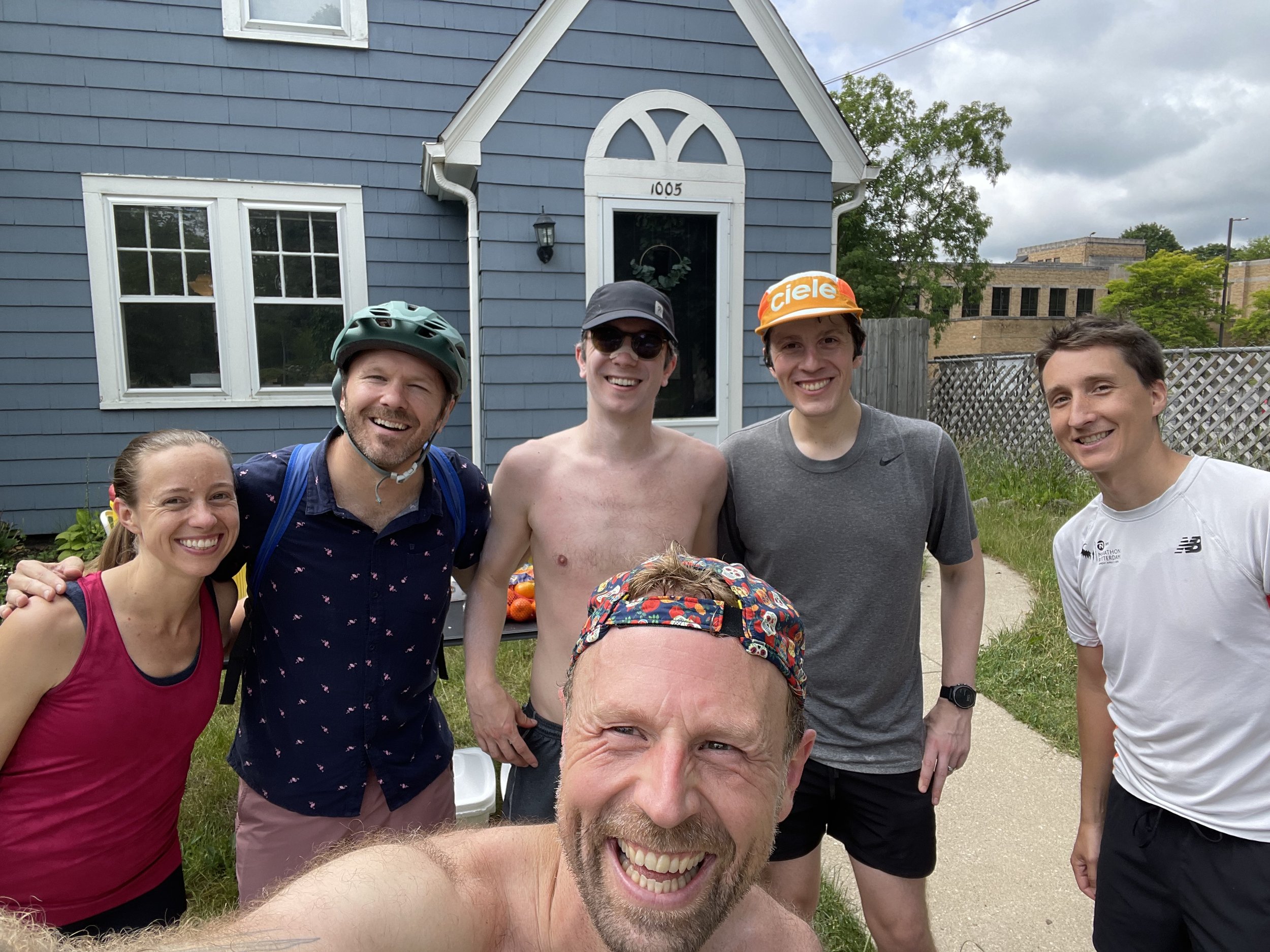
The lows will definitely be the post night call workouts as a resident or trying to get workouts done on my non-call nights (post 34 hours with limited sleep at times) when I wasn’t able to move things due to my schedule. The high points will be the group runs with the Bandits especially Speakeasy Sunday runs and all our fun adventures, regardless of whether I have to throw in a workout in the middle or just going long and easy. Running with friends makes the miles shorter.
9. For anyone looking to shave significant time off their marathon PR or chase a big and audacious goal (running or otherwise), what advice do you have for them?
Consistency, miles, practice at pace, and fuel.
Consistency means showing up, even when it is tough - runs when it’s cold, on the treadmill, following your plan. That said, you should still adjust as necessary for life, injury, rest, etc. Remember that your heart doesn’t know the difference between running and another activity like cycling. And stress is stress no matter if physical from running or taking care of little ones.
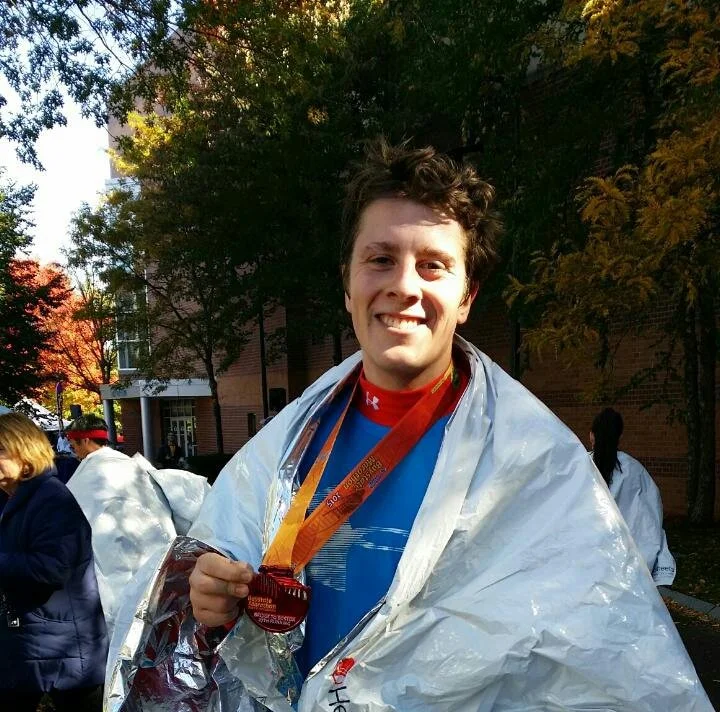
Miles mean putting in the work - you can’t expect to run your fastest marathon or accomplish your big goal if you don’t have a strong base/foundation. Don’t jump up to your highest mileage ever right away, you have to build up to it over time. The miles you put in now stack over time and make the future ones easier. Also, you absolutely do not need to be crazy like me and run 4000 miles in a year. There are plenty of people who run faster than me who run fewer miles than me this year. I’m just playing catch up since I didn’t start running until later in life and not more specifically focus on it until 2020-2022.
1st marathon, 3:30:02 (2015)
Practice at pace means training for the specificity of your goal. It’s important to train across all the paces but especially at paces at or faster than marathon pace. Learning to get comfortable at your goal pace, and pushing your discomfort at faster paces will improve your running economy and make marathon pace seem easier and give you the confidence to go that pace for the whole distance.
Lastly, fuel is giving yourself the tools to set yourself up for success. Neither your body nor your cup of life/love can run on empty, or at least not for long before one or other other (or both) rebel against you. That includes in the marathon itself. Fed is fast, but fasted is future failure. Fuel your body with food (carbs!) and fuel your life with the family, friends, and the Bandits around you.
10. You’ve reached the mountain top. What’s next?
Race wise, I’ll be running Boston2BigSur with the goal of trying to get in the top 10 for the challenge if possible. Other big races include the Huron 100 which will be my first ultra, and the Chicago marathon. Who knows what other crazy opportunities might pop up.
Goal wise, I’ll have to think more about it. The easy answer is getting sub 2:35 in the marathon. But I think a longer term goal in the marathon would be running fast enough to qualify for a sub-elite field at a bigger race like Detroit. That would probably mean getting sub 2:30, if not faster. It was great to race and feel like an elite athlete today with the bottles and pacers. I think it would be amazing to try and compete instead of just running a time trial type of race like today. But if I can’t get any faster at the marathon, the longer term goals will be qualifying for Western States but, more importantly to me, to run The Spartathalon.
